Specialties
Basics
Question Bank
Emergency Desk
NiajeDoc Network
Internal medicine
Surgery
Paediatrics
Obs/Gynae
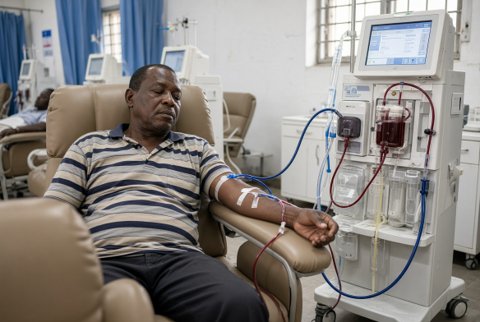
Acute Kidney Injury
Varicella
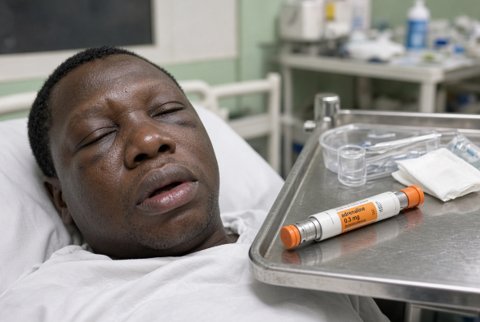
Anaphylaxis
Acute Bacterial Meningitis
Anatomy
Embryology
Microbiology
Diagnostics
Anatomy Bank
1,000 questions
Internal Medicine
1,141 questions
Surgery
1,973 questions
Orthopaedics
1,000 questions
Atlas Emergency Desk
Anaphylaxis
Adrenaline 1:1000 0.5 mg IM, anterolateral thigh
Eclampsia
Magnesium sulfate 4 g IV
Paediatric Hypoglycaemia
Rapid-acting oral carbohydrate 0.3 g/kg PO
Status Epilepticus
Lorazepam 0.1 mg/kg IV
Acute Abdomen
Paracetamol 1 g Oral or IV
Acute Angle-Closure Glaucoma
Severe ocular pain/headache, blurred vision/haloes, nausea/vomiting, red eye, corneal haze and a mid-dilated poorly reactive pupil are classic features.
Acute Aortic Syndrome / Aortic Dissection
Esmolol 500 microgram/kg IV loading bolus over 1 minute, then infusion
Acute Appendicitis
Paracetamol 1 g Oral or IV
Acute Asthma Exacerbation
Ipratropium bromide 500 microgram Nebulised
Acute Cholangitis
Piperacillin-tazobactam 4.5 g IV
Acute Coronary Syndrome
Nitroglycerin (sublingual spray) 0.4 mg Sublingual
Acute Fetal Compromise Requiring Emergency Delivery
Call senior obstetrics, anaesthesia and neonatal team; prepare for emergency birth while assessment proceeds.
Acute Gastroenteritis
Continue age-appropriate diet and breastfeeding in infants.
Acute Heart Failure
Furosemide 60 mg IV bolus
Acute Hydrocephalus
A ventricular catheter is usually inserted into the frontal horn of the lateral ventricle and connected to a calibrated external drainage system.
Acute Ischaemic Stroke
Alteplase 0.9 mg/kg IV
Acute Kidney Injury
This ordering — stabilise first, diagnose the cause second — governs the rest of the pathway below.
Acute Limb Ischaemia
Assess pain, pallor, pulselessness, paraesthesia, paralysis, and poikilothermia.
Acute Liver Failure
Ideally with early transfer to a transplant centre once the diagnosis is suspected, given how rapidly deterioration can occur.
Acute Low Back Pain: Red Flags
Check lower-limb power/reflexes/sensation, saddle sensation, and bladder/bowel function.
Acute Mesenteric Ischaemia
Piperacillin-tazobactam 4.5 g IV
Acute Poisoning / Overdose
Sodium bicarbonate 1.5 mmol/kg IV
Acute Severe Headache
Check GCS, focal neurology, meningism, pupils, BP, temperature, and fundoscopy when possible.
Acute Severe Pain
Morphine 0.075 mg/kg IV
Acute Subdural Haematoma
Vitamin K 10 mg IV
Acute Symptomatic Hypocalcaemia
Calcium gluconate 10% 15 mL IV
Acute Urinary Retention
Tamsulosin 0.4 mg Oral
Acute Uterine Inversion
Call obstetrics, anaesthesia, theatre and blood bank.
Acute Vertigo / Dizziness
Check gait, cranial nerves, limb coordination, speech, and other focal deficits.
Addison Disease
Hydrocortisone 100 mg IV
Adrenal Crisis
Hydrocortisone 100 mg IV bolus
Adult Cardiac Arrest
Adrenaline (epinephrine) 1 mg IV/IO
Adult Emergency Triage
Airway/Breathing: obstructed airway, apnoea/gasping, severe respiratory distress, central cyanosis, very low oxygen saturation, or inability to protect the airway requires immediate resuscitation-area care.
Amniotic Fluid Embolism
If pulseless, start the maternal cardiac-arrest protocol immediately.
Antepartum Haemorrhage
Dexamethasone 6 mg IM
Assault-Related Injuries
Levonorgestrel 1.5 mg Oral
Benzodiazepine Overdose
Airway protection as needed.
Beta-Blocker Poisoning
Regular insulin (high-dose insulin euglycaemic therapy) 1 unit/kg IV bolus, then infusion
Bladder Injury
Most heal without operation.
Boerhaave Syndrome
Piperacillin-tazobactam 4.5 g IV
Bowel Infarction
Piperacillin-tazobactam 4.5 g IV
Burns
Remove smouldering or chemical-soaked clothing (unless stuck to skin).
Burns Resuscitation
Morphine 0.075 mg/kg IV
Caecal Volvulus
Ceftriaxone 2 g IV
Calcium-Channel Blocker Poisoning
Calcium gluconate 10% 60 mL IV over 5–10 minutes
Carbon Monoxide Poisoning
Immediate removal from the source of exposure and administration of high-flow, 100% oxygen via a non-rebreather mask (or via an endotracheal tube if intubated).
Cardiac Arrest in Resource-Limited Settings
Adrenaline 1 mg IV/IO
Cauda Equina Syndrome
Ceftriaxone 2 g IV
Cervical Spine Clearance
Use manual in-line spinal stabilisation during airway intervention and minimise unnecessary spinal movement until risk is assessed.
Chemical Eye Injury
Begin copious ocular irrigation immediately with available clean water or isotonic fluid.
Explore Categories