








Malignant Pleural Mesothelioma
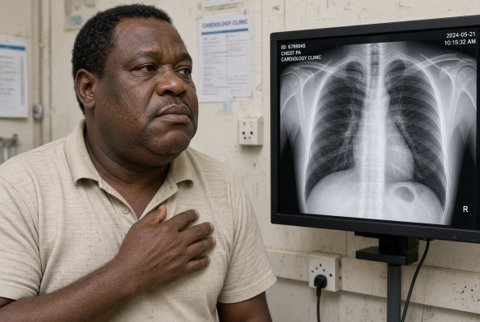
Malignant pleural mesothelioma is an aggressive cancer of the pleural mesothelium, strongly linked to asbestos exposure. It usually presents with a unilateral pleural effusion and chest pain, is rarely curable, and has a median survival of about 12 months.
Incidence is about 1 to 3 cases in 100,000 people each year in countries with past heavy asbestos use, and it is rising where use continues. It is four times commoner in men. Median age at diagnosis is about 70, with a latency of 20 to 60 years from first exposure.
Risk factors are occupational or environmental asbestos exposure (all fibre types, amphiboles most carcinogenic), erionite in some rural regions, prior thoracic radiotherapy and germline BAP1 variants (BAP1 tumour predisposition syndrome, which also carries risk of uveal and cutaneous melanoma and renal cell carcinoma). Smoking does not raise risk.
Pathophysiology. Asbestos fibres cause chronic inflammation, oxidative injury and release of HMGB1, which drives transformation of mesothelial cells. Loss of BAP1, CDKN2A (with MTAP) and NF2 is frequent.
Histological subtypes. Epithelioid (60% to 70%) has the best prognosis, with a median survival of 14 to 18 months. Biphasic (20% to 30%) and sarcomatoid (10% to 20%) subtypes have median survival of 4 to 10 months and respond poorly to chemotherapy.
Prognostic factors. Non-epithelioid histology, male sex, older age, poor performance status, raised white cell count and platelets, low haemoglobin, chest pain and extensive disease worsen survival.
