









Paroxysmal Hemicrania
Paroxysmal hemicrania is a trigeminal autonomic cephalalgia with frequent, severe, short lasting unilateral orbital, supraorbital or temporal pain, with ipsilateral cranial autonomic features and an absolute response to indomethacin. Attacks last 2 to 30 minutes and occur more than 5 times daily.
It is rare, with a prevalence of about 1 in 50,000 to 1 in 100,000. It occurs with equal frequency in both sexes, at a mean age of about 35 years.
Forms. Episodic (remissions of 1 month or more) and chronic (no remission, or remission under 1 month).
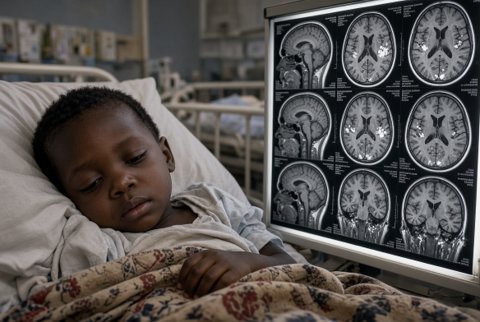
Secondary causes. Pituitary tumours, vascular lesions and posterior fossa lesions are reported, so imaging is required.
Pathophysiology.
Activation of the trigeminal autonomic reflex with posterior hypothalamic involvement causes parasympathetic outflow and cranial autonomic features.
Indomethacin responsiveness is a defining feature, but the mechanism is not known.
