


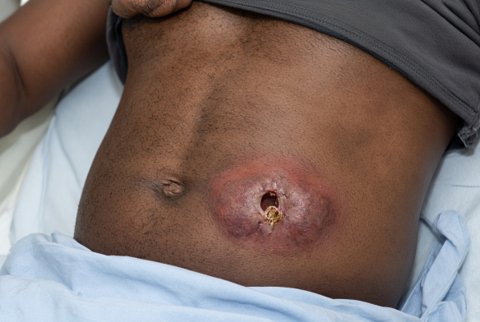









Pentamidine
Pentamidine is an aromatic diamidine antiprotozoal and antifungal used for Pneumocystis pneumonia when co-trimoxazole cannot be used, as aerosolised prophylaxis, and for first-stage African trypanosomiasis caused by Trypanosoma brucei gambiense. It is also a second-line drug for visceral leishmaniasis. Dysglycaemia, hypotension, pancreatitis, kidney injury and QT prolongation make it a high-risk drug.
Class. Antiprotozoal; diamidine.
Mechanism. Binds nucleic acids and inhibits DNA, RNA, phospholipid and protein synthesis in protozoa and Pneumocystis. Uptake by trypanosomes is mediated by a specific transporter.
Pharmacokinetics. Poorly absorbed orally. After intravenous or intramuscular use, widely distributed and accumulates in tissues. Terminal half life 6 to 9 days. Aerosolised use gives high lung levels and low systemic exposure.
