

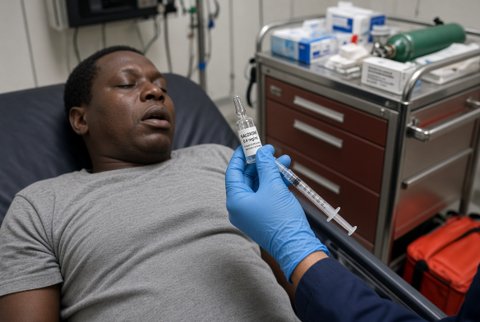










Regular Insulin
Regular insulin is soluble human insulin, a short-acting insulin given subcutaneously about 30 minutes before meals and the only insulin routinely given by intravenous infusion for diabetic ketoacidosis, hyperosmolar states and hyperkalaemia. It is cheap, widely available in public facilities and the mainstay of insulin supply in many low-resource settings. Dose errors, hypoglycaemia and hypokalaemia are the main risks.
Classification. Short-acting human insulin, produced by recombinant DNA technology. Vials and pens of 100 units/mL (U100); a 500 units/mL concentrate exists for severe insulin resistance. In premixed form with NPH insulin it is a different product.
Mechanism. Binds the insulin receptor, increasing glucose uptake in muscle and fat, suppressing hepatic glucose output and ketogenesis, promoting glycogen, protein and fat synthesis, and driving potassium into cells.
Pharmacodynamics. Subcutaneous onset 30 to 60 minutes, peak 2 to 4 hours, duration 5 to 8 hours. Intravenous effect begins within minutes.
Pharmacokinetics. Cleared by the liver and kidney, with about 50% hepatic first-pass extraction of portal insulin. Intravenous half-life about 5 to 10 minutes; subcutaneous absorption is slower and variable, rising with exercise, heat and injection into the abdomen. Requirements fall as kidney function falls because renal clearance is reduced.
