










Skin and Soft Tissue Infections
Skin and soft tissue infections are a broad category of bacterial infections affecting the skin and underlying soft tissue. They range from superficial, self limiting conditions such as impetigo to deep, rapidly progressive, life threatening necrotising infection.
Classification by depth and severity (superficial, purulent, non purulent cellulitis, and necrotising) is the essential framework guiding both investigation and the urgency of intervention.
Classification
- Impetigo is a superficial epidermal infection caused predominantly by Staphylococcus aureus and Streptococcus pyogenes. It presents with honey coloured crusted lesions, typically on the face and extremities, and is particularly common in young children.
- Erysipelas is a more superficial form of cellulitis involving the upper dermis and superficial lymphatics, classically caused by Streptococcus pyogenes. It presents with a sharply demarcated, raised, erythematous, intensely painful plaque, most commonly on the lower limb or face.
- Cellulitis involves the deeper dermis and subcutaneous fat, with less sharply demarcated borders than erysipelas. It is caused by Streptococcus pyogenes or Staphylococcus aureus (including methicillin resistant strains in relevant populations). It typically presents with spreading erythema, warmth, swelling and tenderness.
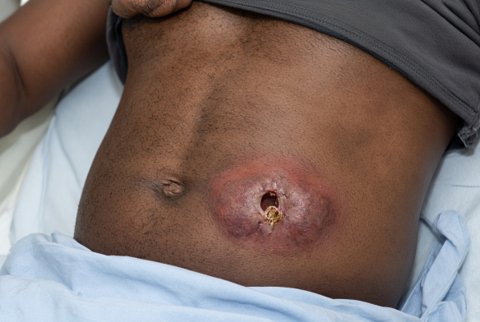
- Purulent skin and soft tissue infection, including furuncles, carbuncles and cutaneous abscesses, reflects localised collection of pus. It is most commonly caused by Staphylococcus aureus, and drainage is the primary intervention.
- Necrotising soft tissue infection, addressed in greater detail under gas gangrene, represents the most severe end of this spectrum. It shows rapid progression, disproportionate pain, and systemic toxicity requiring emergency surgical intervention.
