



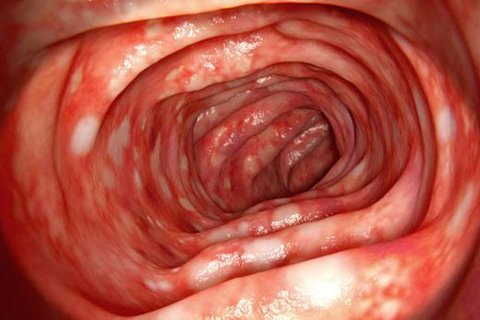








Sulfasalazine for Inflammatory Bowel Disease
Sulfasalazine is a prodrug of mesalazine joined to sulfapyridine. Colonic bacteria split it to release both parts. Mesalazine provides the anti-inflammatory effect in the colon, and sulfapyridine causes most adverse effects. It is a low-cost treatment for mild to moderate ulcerative colitis and for colonic Crohn disease, and it is also used in inflammatory arthritis.
Classification. Aminosalicylate; anti-inflammatory; conventional DMARD.
Mechanism. Cleaved by bacterial azoreductases in the colon into 5-aminosalicylic acid (anti-inflammatory) and sulfapyridine (absorbed systemically). Inhibits prostaglandin and leukotriene synthesis and inflammatory cell activity.
Pharmacodynamics. Onset in colitis over 2 to 4 weeks; maximum effect by 8 weeks.
Pharmacokinetics. About 10% to 30% of the parent drug is absorbed in the small bowel; the rest reaches the colon. Sulfapyridine is nearly fully absorbed and its half-life depends on acetylator status (slow acetylators have higher levels and more toxicity).
Metabolism. Sulfapyridine is acetylated by N-acetyltransferase; 5-aminosalicylic acid is mostly excreted in faeces.
