











Transient Tachypnoea Of The Newborn
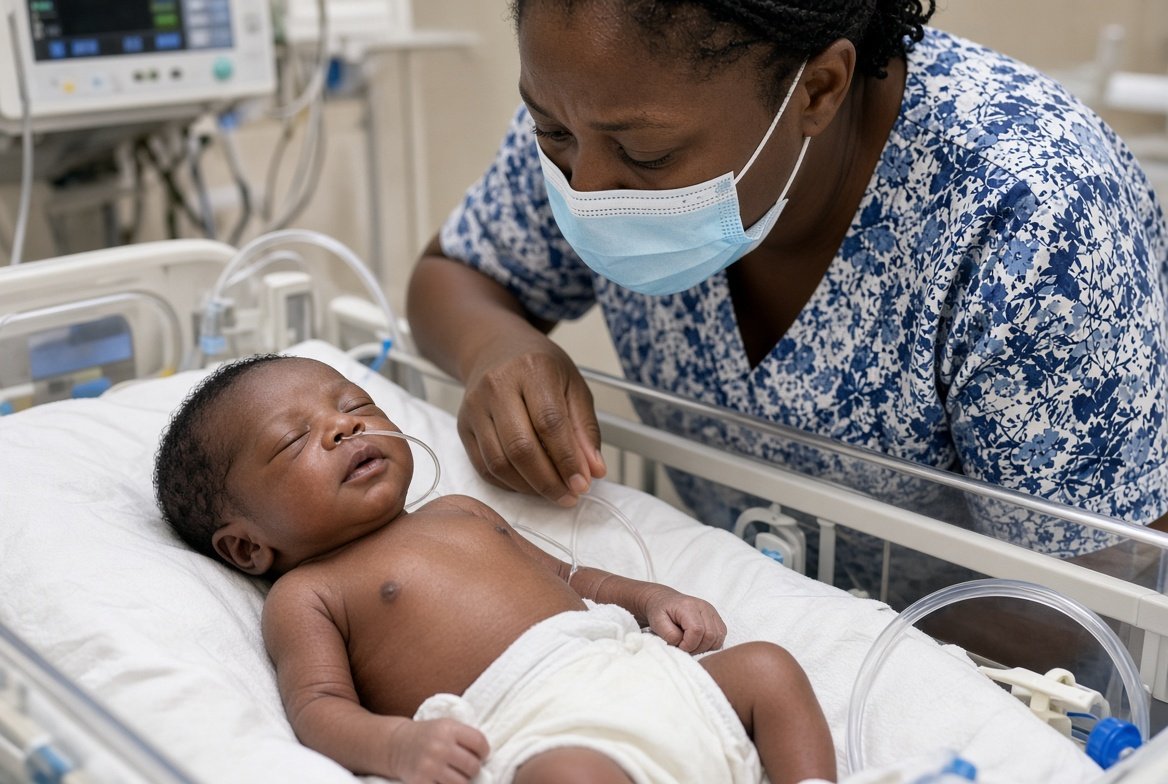
Transient tachypnoea of the newborn (wet lung) is a self-limited respiratory distress syndrome of term and late preterm babies caused by delayed clearance of fetal lung fluid. It affects about 4 to 6 per 1000 term births and up to 1 to 2 percent of late preterm infants. Symptoms begin within 2 hours of birth, peak at 12 to 24 hours and resolve within 24 to 72 hours, and the prognosis is excellent.
- Mechanism: the fetal lung is fluid filled. At labour a catecholamine surge opens epithelial sodium channels and the fluid is reabsorbed. Birth by elective caesarean section without labour, or very rapid delivery, leaves interstitial and alveolar fluid that reduces compliance.
- Risk factors: elective caesarean section before labour (strongest), delivery at 35 to 38 weeks, maternal diabetes or asthma, male sex, macrosomia, maternal sedation, perinatal asphyxia, family atopy.
- It is a diagnosis of exclusion. Sepsis, pneumonia, respiratory distress syndrome, meconium aspiration, pneumothorax, congenital heart disease, persistent pulmonary hypertension and diaphragmatic hernia must be considered.
- Some affected children have transient wheeze in later infancy.
