












ABO Haemolytic Disease of the Newborn
Also known as: ABO Hemolytic Disease of the Newborn, ABO HDN
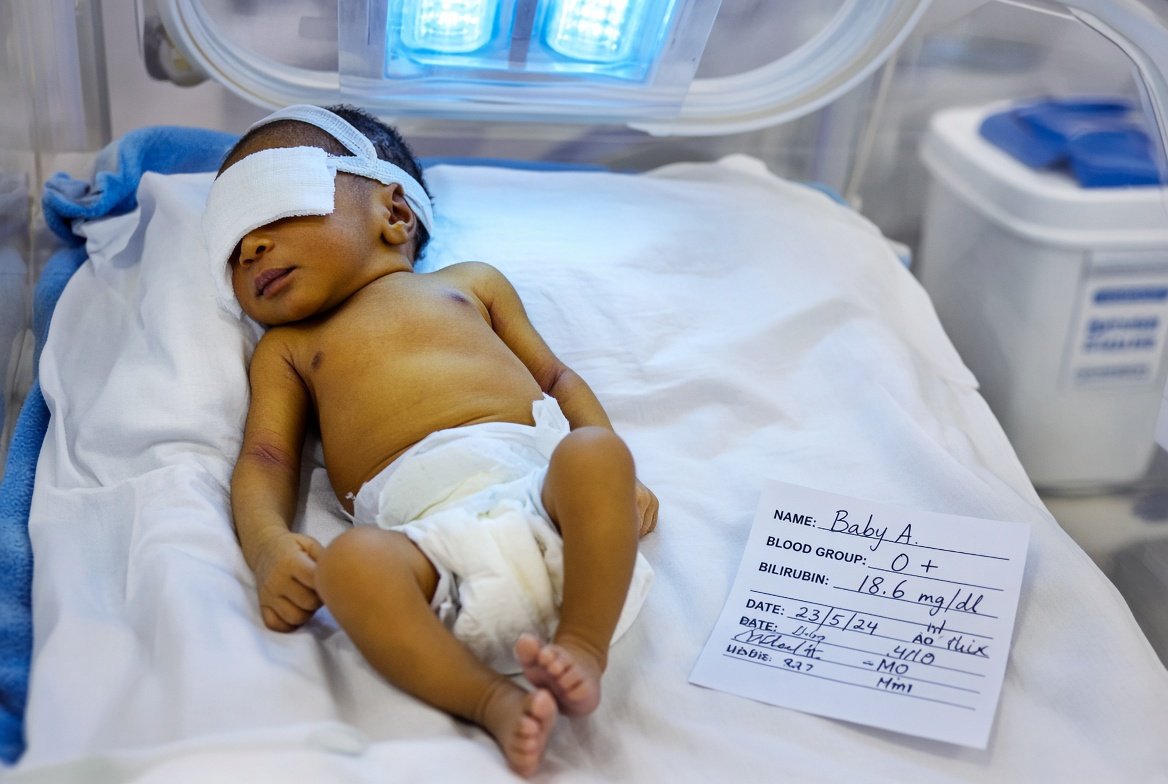
ABO haemolytic disease of the newborn is haemolysis of an infant's red cells by maternal IgG anti-A or anti-B antibodies that cross the placenta. It almost always affects group A or B infants of group O mothers and is usually mild.
It is the commonest cause of neonatal haemolytic jaundice. ABO incompatibility occurs in a substantial minority of pregnancies, but clinically significant haemolysis occurs in only a small proportion of them. The first pregnancy can be affected.
Haemolysis is less severe than in Rh disease because A and B antigens are weakly expressed on neonatal red cells and are also found on other tissues. Hydrops is rare.
Pathophysiology.
Maternal IgG anti-A or anti-B coats the infant's red cells and removes them in the spleen. Haemolysis releases bilirubin that the immature liver conjugates slowly.
Jaundice appears in the first 24 hours, bilirubin rises rapidly and anaemia can develop later. Late anaemia at 2 to 6 weeks is caused by persisting antibody and a poor marrow response.
