












Acquired Arteriovenous Fistula
Also known as: AV Fistula
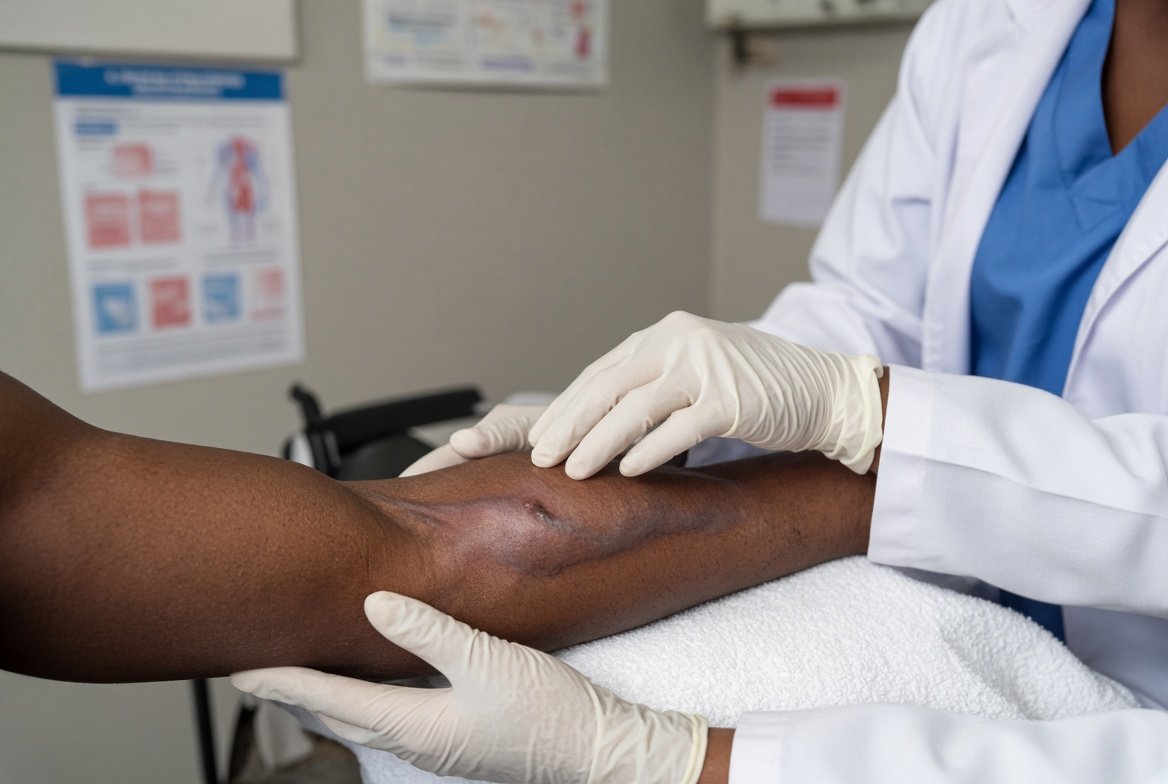
Acquired arteriovenous fistula is an abnormal communication between an artery and a vein that follows injury, disease or a procedure. It diverts blood from the arterial to the venous system, and its effects depend on the size of the shunt, its site and its duration. Intentional haemodialysis fistulae are not covered.
Causes by frequency:
- Iatrogenic: femoral puncture and catheterisation, renal and hepatic biopsy, spinal surgery (lumbar disc surgery causing iliac artery to vein fistula), and surgical dissection.
- Trauma: penetrating injury (stab, gunshot), and blunt injury with fracture.
- Spontaneous rupture of an arterial aneurysm into an adjacent vein (aorto caval fistula from abdominal aortic aneurysm in about 3 to 4% of ruptures, and iliac and popliteal fistulae), and erosion from infection or tumour.
Fistula after femoral catheterisation occurs in about 0.1 to 1% of procedures, and many small ones close within weeks. Large fistulae from trauma and aneurysm rupture enlarge with time.
Pathophysiology.
Blood takes the path of least resistance from the high pressure artery to the low pressure vein, which lowers peripheral resistance, raises venous return and increases cardiac output. A large, long standing fistula causes high output heart failure.
Venous pressure rises distal to the fistula, causing limb swelling, varicose veins, skin changes and venous ulceration. The feeding artery enlarges and may become aneurysmal, while the artery distal to the fistula can be hypoperfused (steal), causing ischaemia.
Increased flow causes vein wall arterialisation and dilatation, and the aorto caval fistula causes sudden volume load with right heart failure, renal hypoperfusion and pulmonary hypertension.
