












Acute Abdomen
Also known as: Surgical abdomen
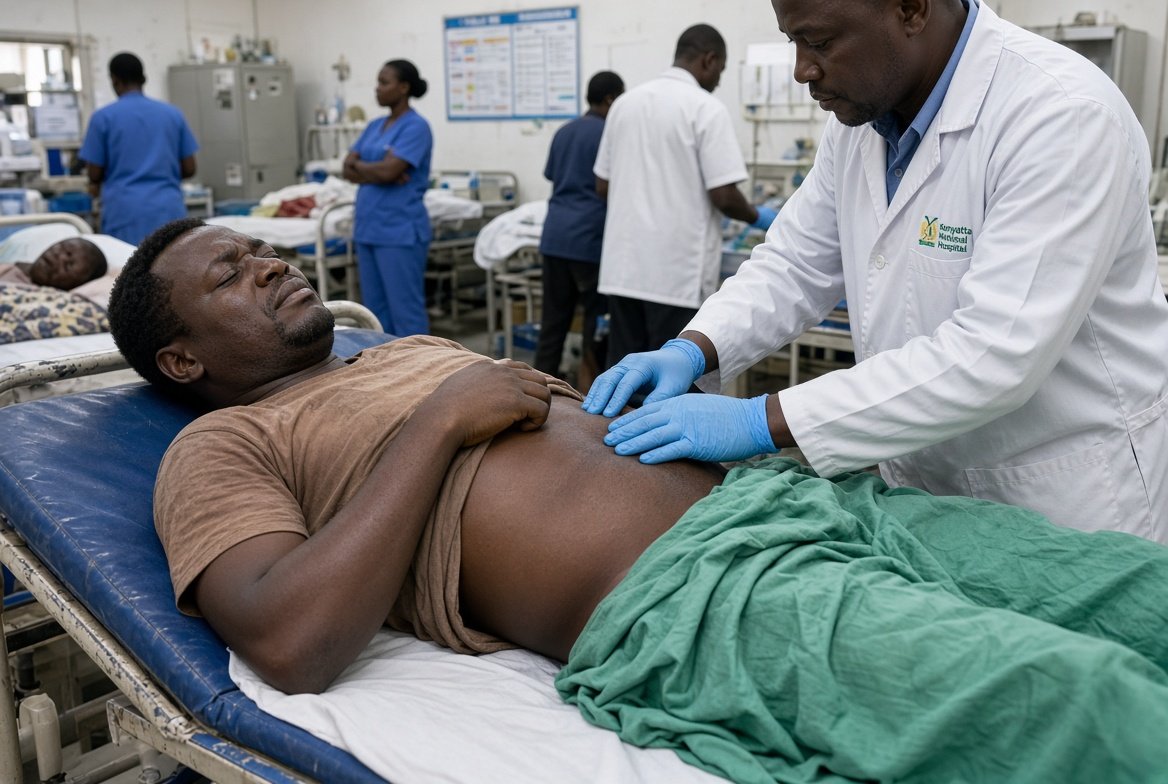
The acute abdomen is a clinical syndrome of sudden onset abdominal pain, generally lasting under 7 days (usually under 24 to 48 hours), with signs of peritoneal irritation or systemic disturbance suggesting an intra abdominal disease that needs urgent assessment and often surgery. It is a presentation, not a diagnosis. Abdominal pain accounts for 5 to 10% of emergency department visits, and 20 to 30% of those patients need surgery or intervention.
Pain mechanisms:
- Visceral pain: stretch or ischaemia of hollow viscera; poorly localised, dull or cramping, felt in the midline by embryological origin (foregut epigastrium, midgut periumbilical, hindgut hypogastrium)
- Parietal (somatic) pain: irritation of the parietal peritoneum; sharp, well localised, worse with movement and coughing
- Referred pain: shoulder tip (diaphragmatic irritation), scapula (biliary), testis (renal colic), back (pancreatic, aortic)
Major causes:
- Inflammatory and infective: appendicitis, cholecystitis, cholangitis, diverticulitis, pancreatitis, perforated peptic ulcer, pelvic inflammatory disease, abscess, infective colitis
- Obstruction: small bowel obstruction (adhesions, hernia, tumour), large bowel obstruction, volvulus, biliary or ureteric colic
- Vascular: mesenteric ischaemia, ruptured aortic aneurysm, ischaemic colitis, splenic infarct, ovarian torsion
- Haemorrhage and perforation: ruptured ectopic pregnancy, ruptured ovarian cyst, ruptured spleen or liver lesion, trauma
- Medical mimics: diabetic ketoacidosis, inferior myocardial infarction, lower lobe pneumonia, porphyria, adrenal crisis, sickle cell crisis, lead poisoning, herpes zoster
- Special groups: elderly, immunosuppressed, pregnant and steroid treated patients have blunted signs; up to 40% of elderly patients present atypically, with mortality of 10 to 20% in those over 65
