

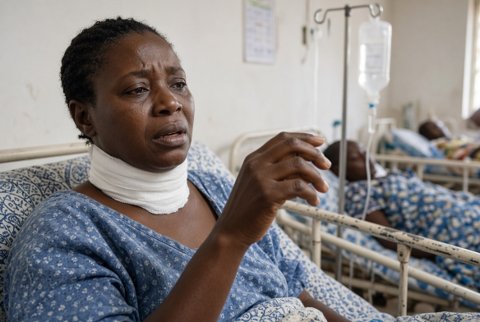










Buruli Ulcer
A chronic, progressive necrotising skin and soft tissue infection caused by Mycobacterium ulcerans, an environmental mycobacterium. It produces a potent exotoxin (mycolactone) responsible for extensive tissue necrosis, characteristically with a striking absence of pain in the great majority of cases.
It is endemic predominantly to specific regions of West and Central Africa, with additional recognised endemic foci in parts of Australia, Southeast Asia and South America.
The mechanism of transmission is incompletely understood. It is believed to involve environmental exposure, particularly proximity to slow moving or stagnant freshwater bodies, with possible insect vector involvement.
It is the third commonest mycobacterial infection worldwide after tuberculosis and leprosy. Delayed diagnosis and treatment cause substantial morbidity and disfigurement, so prompt recognition matters.
Pathophysiology
- Mycolactone, a unique polyketide toxin produced by Mycobacterium ulcerans, diffuses through surrounding tissue. It has extensive cytotoxic and immunosuppressive local effects.
- It produces progressive coagulative necrosis of the subcutaneous fat and overlying skin while suppressing the local immune and inflammatory response.
- This accounts for the extensive, undermined tissue destruction and the striking absence of significant pain and inflammatory signs. The combination frequently contributes to delayed presentation and diagnosis.
- The precise mode of transmission remains incompletely established. Environmental exposure to specific freshwater sources in endemic regions is strongly implicated.
- Some evidence supports a role for aquatic insects (including certain water bugs) as a potential vector or environmental reservoir.
- Person to person transmission does not occur, which distinguishes the epidemiological approach from many other mycobacterial infections.
