








Filariasis Diagnostics
Lymphatic filariasis (Wuchereria bancrofti, Brugia malayi, B. timori), loiasis (Loa loa) and onchocerciasis (Onchocerca volvulus) are diagnosed by detecting microfilariae in blood or skin, circulating filarial antigen, antibody tests and molecular methods.
For lymphatic filariasis, the thick blood film taken at night (22:00 to 02:00 hours, nocturnal periodicity) shows sheathed microfilariae, with concentration methods (Knott technique, membrane filtration of 1 to 5 mL of blood) increasing sensitivity.
Circulating filarial antigen by immunochromatographic card test (W. bancrofti only, sensitivity 96 to 100%, specificity 100%) can be done at any time of the day. Loiasis is diagnosed by daytime blood films (10:00 to 14:00 hours) and by eye worm.
Onchocerciasis is diagnosed by skin snips (microfilariae emerging into saline or water after 30 minutes to 24 hours), nodule biopsy, slit lamp examination of the eye and serology (Ov16 antibody).
Lymphatic filariasis affects about 50 million people, with 860 million at risk in 44 countries, and causes lymphoedema, elephantiasis, hydrocele, chyluria and tropical pulmonary eosinophilia. Onchocerciasis affects about 20 million, with 1 million blind or visually impaired (the second cause of infectious blindness), mostly in sub-Saharan Africa.
Loiasis affects 10 to 15 million in Central and West Africa, and microfilaraemia over 30 000 in each mL carries a risk of severe reaction to ivermectin and diethylcarbamazine.
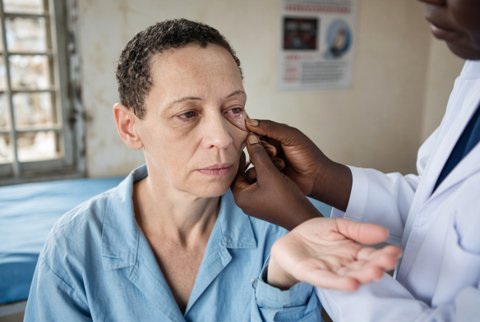
Indications. Lymphoedema, hydrocele, scrotal swelling, chyluria or recurrent adenolymphangitis in a person from or living in an endemic area. Eosinophilia, nocturnal cough and wheeze (tropical pulmonary eosinophilia). Itchy skin, nodules, depigmentation or eye disease in an endemic area (onchocerciasis). Calabar swellings, eye worm or itching in West or Central Africa (loiasis).
Unexplained eosinophilia in a returned traveller or migrant. Mass drug administration surveys. Loa loa screening before ivermectin in co-endemic areas.
Specimen. Blood collected at night (lymphatic filariasis, Brugia) or at midday (loiasis) in EDTA or finger prick thick films (60 microlitres) stained with Giemsa; venous blood 1 to 5 mL for filtration or Knott concentration; serum for antigen and antibody; skin snips (1 to 2 mg) from the iliac crest, buttock, calf and shoulder, placed in saline; nodule excision; ultrasound of the scrotum or lymphatics (filarial dance sign) and slit lamp of the eye.
