











Hurthle Cell Carcinoma
Also known as: Oncocytic Thyroid Carcinoma, Hürthle Cell Carcinoma
Hurthle cell carcinoma (oncocytic carcinoma of the thyroid) is a follicular derived thyroid cancer in which over 75% of cells are oncocytic. Capsular or vascular invasion separates it from the adenoma.
It accounts for about 3 to 5% of thyroid cancers, mostly in adults aged 50 to 60 years, and is more common in women.
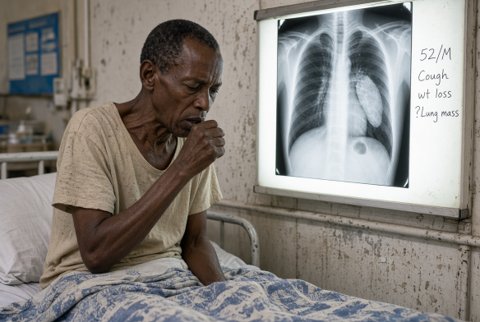
Compared with follicular carcinoma it more often has nodal and distant metastases (lung, bone) and takes up radioiodine poorly. Outcomes are worse than papillary carcinoma.
Pathophysiology.
The tumour has widespread mitochondrial DNA variants and chromosomal loss, causing mitochondrial accumulation. Loss of iodide trapping explains the weak radioiodine uptake.
