












Paediatric Heart Failure
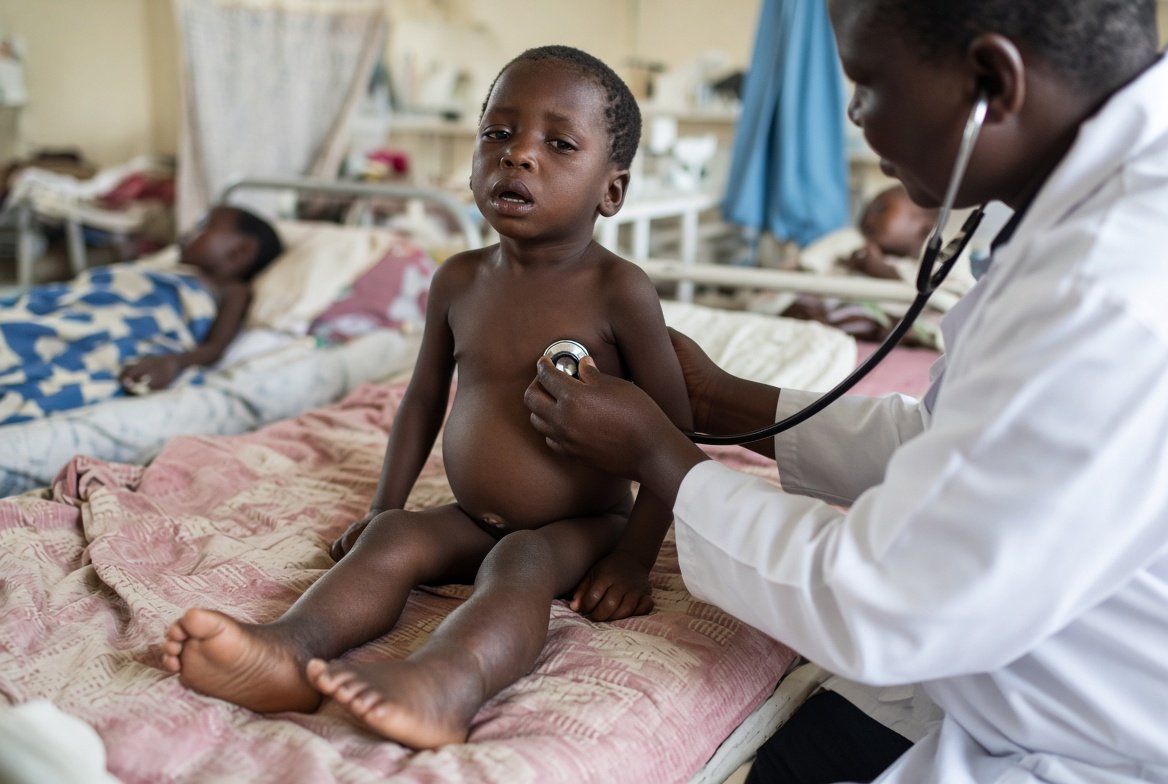
Paediatric heart failure is a clinical syndrome in which the heart cannot meet the metabolic demands of the body or can do so only at elevated filling pressures. Causes and presentations differ from adults, with congenital heart disease predominating. Incidence is about 0.9-7.4 per 100,000 children yearly, and about 11,000-14,000 hospitalisations annually in the United States.
Aetiology by age
- Fetus: supraventricular tachycardia (hydrops), complete heart block, anaemia, twin-twin transfusion, severe valvular regurgitation.
- Neonate (first week): left heart obstruction (hypoplastic left heart, critical aortic stenosis, coarctation, interrupted aortic arch), perinatal asphyxia (myocardial dysfunction), severe anaemia, sepsis, arrhythmias (SVT), systemic AV malformation (vein of Galen), transient myocardial dysfunction in infants of diabetic mothers.
- Infants (1-6 months): large left-to-right shunts (ventricular septal defect, patent ductus arteriosus, AV canal) as pulmonary vascular resistance falls (peak at 6-8 weeks), anomalous left coronary artery from pulmonary artery (ALCAPA), cardiomyopathy, myocarditis, and arrhythmias.
- Older children: dilated cardiomyopathy (idiopathic, genetic, post-myocarditis), myocarditis (viral: coxsackie B, adenovirus, parvovirus B19, SARS-CoV-2 and MIS-C), rheumatic heart disease, endocarditis, anthracycline cardiotoxicity (cumulative dose over 250-300 mg/m2), hypertrophic and restrictive cardiomyopathy, arrhythmia-induced (tachycardia, complete heart block), Duchenne muscular dystrophy cardiomyopathy, Kawasaki disease sequelae, Eisenmenger syndrome, pulmonary hypertension, thalassaemia (iron overload), systemic lupus, and failing Fontan circulation and repaired congenital heart disease.
- Others: metabolic and mitochondrial disorders (carnitine deficiency, Pompe disease, Barth syndrome), thyrotoxicosis, severe anaemia, nephritis/hypertension, and cystic fibrosis (cor pulmonale).
- Classification: Ross classification (infants), modified NYHA (older), and ACC/AHA stages A-D adapted for children. Types: systolic (reduced ejection fraction), diastolic, high-output (anaemia, AV malformation, thyrotoxicosis), right heart failure (pulmonary hypertension, Fontan), and single ventricle failure.
- Pathophysiology: volume or pressure overload and myocardial dysfunction trigger neurohormonal activation (sympathetic, renin-angiotensin-aldosterone, natriuretic peptides, endothelin) with adverse remodelling. Children have lower myocardial reserve and immature calcium handling.
- Prognosis: depends on cause. Dilated cardiomyopathy in children has 5-year transplant-free survival around 50-60%. Myocarditis recovers in about half, many need MCS or transplant.
