












Vesicoureteric Reflux
Also known as: Vesicoureteral Reflux
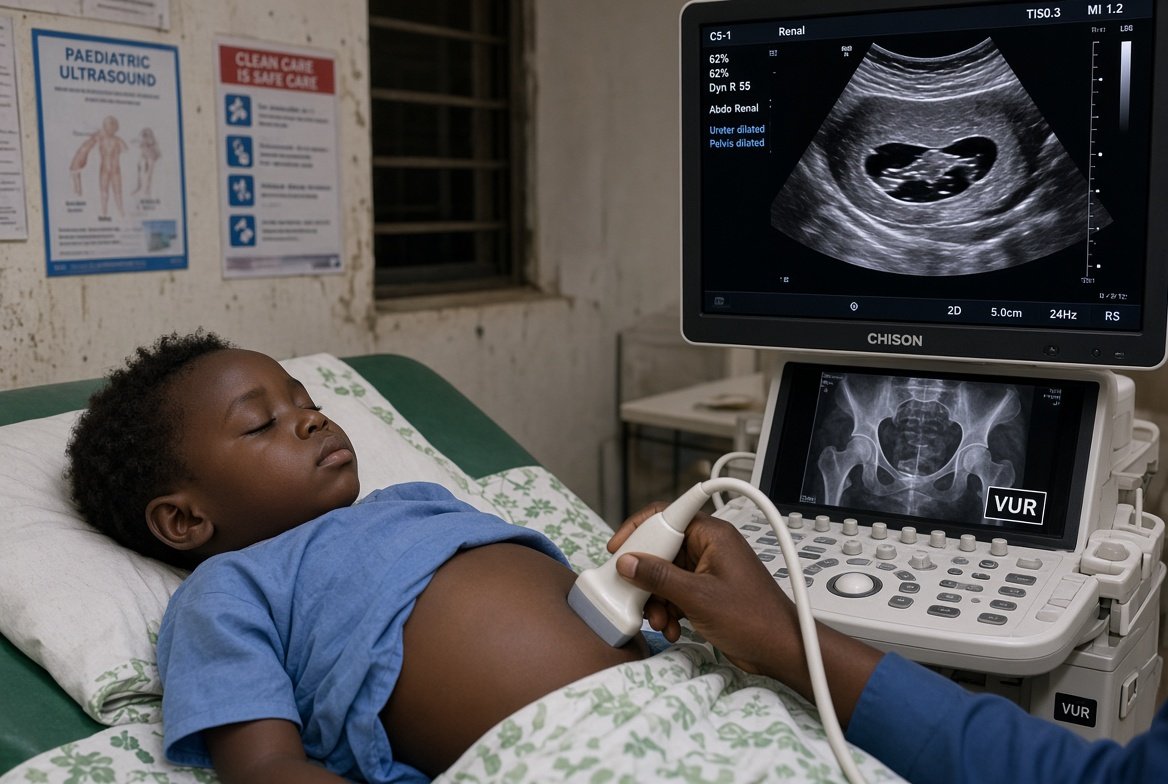
Vesicoureteric reflux is retrograde flow of urine from the bladder into the upper urinary tract during bladder filling or voiding. The urine reaches the ureter and, in more severe cases, the renal collecting system. It results from an incompetent or anatomically deficient vesicoureteric junction valve mechanism. It is common in infants and young children.
Its clinical significance is the associated increased risk of urinary tract infection, specifically pyelonephritis, because infected urine is transported retrogradely into the upper renal tract.
Recurrent or severe, high-grade reflux carries a risk of renal scarring. In the most severe, longstanding and inadequately managed cases, it can cause chronic kidney disease.
Management is graded and risk-stratified. It takes account of the reflux grade, the presence or absence of pre-existing renal scarring, and the frequency of recurrent infection.
Classification and pathophysiology
- Primary vesicoureteral reflux is a congenital, intrinsic abnormality of the vesicoureteric junction. It most commonly reflects an abnormally short intramural (within the bladder wall) course of the distal ureter.
- Normally, this segment is compressed against the surrounding bladder musculature during filling and voiding. This acts as a valve and prevents retrograde flow. An inadequate intramural tunnel length produces an incompetent valve and reflux.
- Secondary vesicoureteral reflux occurs with an identifiable underlying predisposing condition. Examples are bladder outlet obstruction, a neurogenic bladder, or significant bladder dysfunction from any cause. Elevated intravesical pressure overcomes the normal valve mechanism. Management is directed at the underlying cause.
- The internationally recognised grading system ranges from grade one (reflux confined to the ureter without dilation) to grade five (severe reflux with marked ureteric and renal pelvicalyceal dilation and tortuosity). It is an essential, standardised framework for severity.
- Grade guides the anticipated natural history and the management approach. Lower grade reflux has a substantially higher rate of spontaneous resolution over time than higher grade reflux.
- There is a well recognised familial predisposition. Risk is substantially increased in siblings and offspring of an affected individual. Routine screening of asymptomatic siblings remains debated, with variation in practice, given the generally favourable natural history of milder disease.
