Principles. Treat early to prevent scarring, combine agents with different mechanisms, avoid antibiotic monotherapy to limit resistance, and maintain with a topical retinoid after clearing. Judge response after 8 to 12 weeks.
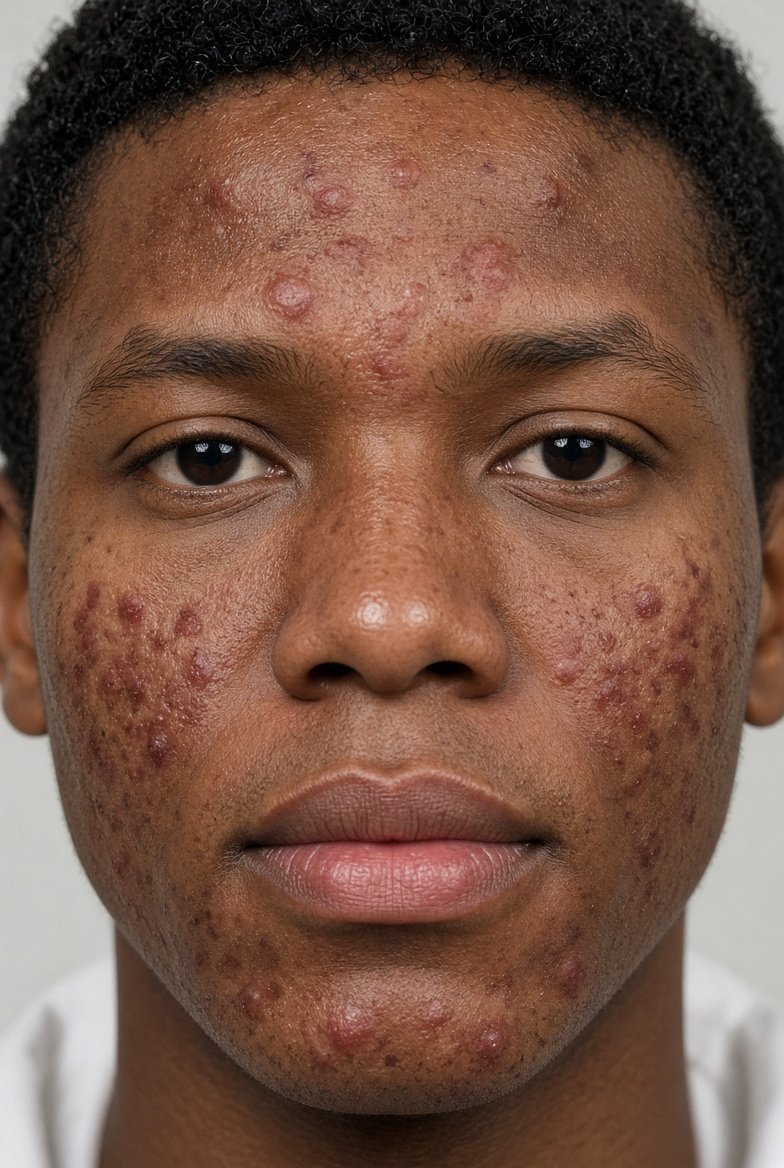
Mild acne (comedonal). Topical retinoid nightly: adapalene 0.1% or 0.3%, tretinoin 0.025 to 0.05%, tazarotene 0.1%, or trifarotene 0.005% (face and trunk). Add benzoyl peroxide 2.5 to 5% wash or gel. Alternatives: azelaic acid 15 to 20% twice daily, salicylic acid. Counsel on irritation and an initial purge over 2 to 4 weeks; use a pea sized amount with moisturiser and sunscreen. Avoid retinoids in pregnancy.
Mild to moderate inflammatory acne. Fixed combinations: benzoyl peroxide with clindamycin 1%, adapalene 0.1% with benzoyl peroxide 2.5%, a triple combination with clindamycin, or tretinoin with clindamycin. Topical clindamycin is never used alone. Clascoterone 1% cream twice daily (topical androgen receptor inhibitor), topical minocycline 4% foam and dapsone 5 to 7.5% gel are further options.
Moderate to severe acne.
- Oral tetracyclines: doxycycline 100 mg once or twice daily, lymecycline 408 mg daily, minocycline 50 to 100 mg twice daily (or extended release about 1 mg/kg), or sarecycline 60 to 150 mg daily by weight (narrow spectrum, suitable from age 9). Limit to 3 to 4 months, with concurrent benzoyl peroxide and a topical retinoid. Adverse effects: photosensitivity (doxycycline), vestibular symptoms and pigmentation, drug induced lupus and hepatitis (minocycline), oesophagitis (take with water, upright). Avoid in pregnancy and under age 8. Macrolides (erythromycin 500 mg twice daily, azithromycin) are alternatives with more resistance.
- Hormonal therapy for women: combined oral contraceptives containing drospirenone, cyproterone acetate, norgestimate or norethindrone acetate with ethinylestradiol (effect over 3 to 6 months). Spironolactone 50 to 100 mg daily, up to 200 mg, with contraception because of feminisation of a male fetus; routine potassium checks are not needed in healthy young women. Cyproterone acetate 2 mg with ethinylestradiol 35 micrograms carries venous thromboembolism risk and is reserved for acne not controlled otherwise.
- Isotretinoin 0.5 to 1 mg/kg/day with food (many start at 0.25 to 0.5 mg/kg/day), for 16 to 24 weeks until a cumulative dose of 120 to 150 mg/kg; low dose long term regimens (0.1 to 0.3 mg/kg/day) are used for maintenance. Indications: severe nodulocystic acne, scarring acne, moderate acne that has failed two courses of oral antibiotics, early relapse after antibiotics, and acne with major psychological burden. Monitor lipids and liver tests at baseline and 1 to 2 months, and mood. A pregnancy prevention programme is mandatory because of teratogenicity (craniofacial, cardiac, thymic and central nervous system malformations). Adverse effects: cheilitis, xerosis, epistaxis, dry eyes, myalgia, raised triglycerides and transaminases, photosensitivity. Avoid tetracyclines concurrently (pseudotumour cerebri), and avoid waxing and laser resurfacing during and for 6 months after therapy. Relapse occurs in 20 to 30%; a second course can follow after at least 8 weeks.
Acne fulminans. Prednisolone 0.5 to 1 mg/kg/day for about 4 weeks first, then add isotretinoin at 0.1 mg/kg/day, increased slowly, with the steroid tapered. Treat bone pain and arthralgia.
Procedures. Comedone extraction, intralesional triamcinolone 2.5 to 10 mg/mL for nodules, chemical peels (salicylic or glycolic acid), photodynamic therapy and blue light in selected patients. For atrophic scars: subcision, microneedling, fractional laser or radiofrequency resurfacing, punch excision for ice pick scars, fillers. For hypertrophic scars: intralesional triamcinolone 10 to 40 mg/mL, silicone sheeting, laser.
Pregnancy. Safe options are topical azelaic acid, benzoyl peroxide, erythromycin and clindamycin. Avoid oral and topical retinoids, tetracyclines and spironolactone.
Maintenance. Continue a topical retinoid, with or without benzoyl peroxide, after clearing. Diet and washing play a small role; avoid picking, over washing and harsh scrubs.