

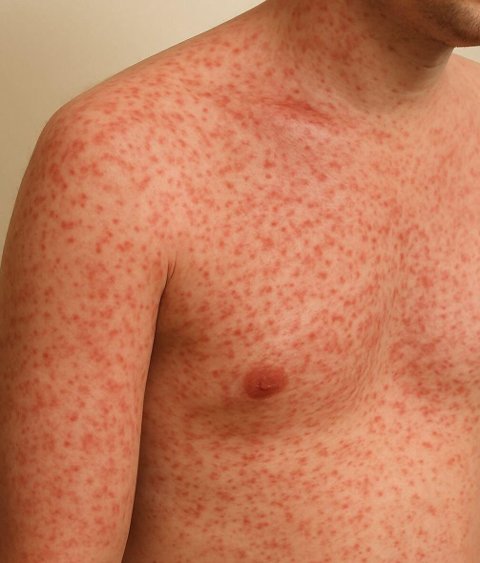










Airborne Contact Dermatitis
Airborne contact dermatitis is an allergic or irritant dermatitis caused by airborne particles, vapours or aerosols that deposit on exposed skin. It mainly affects the face, neck and forearms, and often mimics photodermatitis.
It is most frequent in agricultural, horticultural, forestry, construction and chemical workers, and in people exposed to plants and household sprays. Many cases are underdiagnosed because the exposure is not obvious.
Causes include plants (Compositae such as ragweed and chrysanthemum, Parthenium hysterophorus, sesquiterpene lactones), pesticides, epoxy resin and acrylate vapour, wood dust, fragrance sprays and rubber chemicals. Drug particles and aerosols from handling medication are an occupational cause in healthcare workers.
Pathophysiology.
Particles settle on exposed skin and mucosa and act as haptens, triggering type IV hypersensitivity in sensitised people. Non-allergic irritant reactions occur at high concentrations. Light exposure can coexist, and Parthenium disease may progress to chronic actinic dermatitis.
