
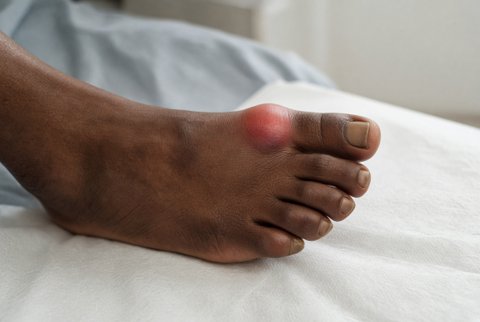











Boutonniere Injury
A boutonniere deformity is flexion of the proximal interphalangeal joint and hyperextension of the distal interphalangeal joint of a finger, caused by disruption of the central slip of the extensor tendon at its insertion on the dorsal base of the middle phalanx. The lateral bands then slip volar to the axis of the joint and act as flexors of the proximal joint and extensors of the distal joint.
- Acute causes: a forced flexion of the extended proximal interphalangeal joint (a blow to the tip of a finger in a ball sport), volar dislocation of the joint, a dorsal laceration, burns and an avulsion fracture of the base of the middle phalanx. Chronic causes: rheumatoid arthritis (the commonest non-traumatic cause), psoriatic arthritis and Dupuytren disease.
- The deformity often does not appear for 1 to 3 weeks after the injury, because the triangular ligament holds the lateral bands dorsal at first, so the injury is commonly missed or labelled as a sprain.
- The long finger, ring finger and little finger are most often affected, and young active men and ball players are the commonest patients.
