









Coal Workers Pneumoconiosis
Also known as: Black Lung
Coal workers' pneumoconiosis (CWP, black lung) is a pneumoconiosis caused by inhalation of coal mine dust, containing coal, silica and silicates.
After 10 to 20 years underground (or surface) mining exposure; prevalence has risen again in some regions (Appalachia, rapidly progressive disease with silica rich seams and machine mining).
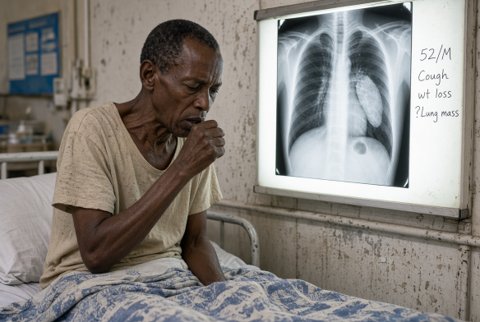
Simple CWP: small rounded opacities (coal macules and nodules). Complicated CWP (progressive massive fibrosis): large conglomerate masses over 1 cm, upper lobes.
Coal mine dust lung disease also includes emphysema, chronic bronchitis, small airways disease, mixed dust pneumoconiosis, silicosis, and airflow obstruction.
Complications: respiratory failure, cor pulmonale, tuberculosis, Caplan syndrome (rheumatoid pneumoconiosis nodules), lung cancer (modest), cavitation of masses.
