



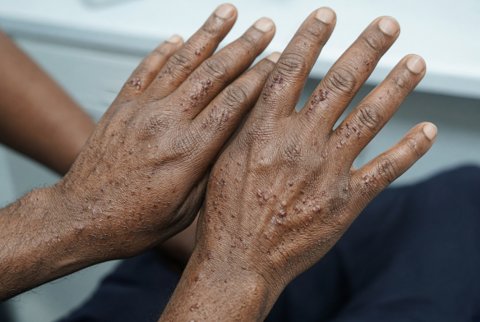








Cryoglobulinaemic Glomerulonephritis
Also known as: Cryoglobulinemic Glomerulonephritis
Cryoglobulinaemic glomerulonephritis is an immune complex glomerulonephritis caused by cryoglobulins, immunoglobulins that precipitate in the cold and redissolve on rewarming. Type I is monoclonal (IgM or IgG; associated with myeloma, Waldenström macroglobulinaemia and lymphoma). Type II is mixed, with a monoclonal IgM kappa rheumatoid factor bound to polyclonal IgG. Type III is mixed with polyclonal IgM and IgG.
Types II and III account for most cases, and hepatitis C virus infection accounts for 80 to 90% of mixed cryoglobulinaemia worldwide; other causes are hepatitis B, HIV, systemic lupus erythematosus, Sjögren syndrome, lymphoproliferative disease and idiopathic disease. Kidney involvement occurs in 20 to 35% of patients with mixed cryoglobulinaemia, usually as a membranoproliferative glomerulonephritis.
Pathophysiology. Cryoglobulin complexes deposit in glomeruli and small vessels, activating the classical complement cascade (low C4 and CH50, relatively normal C3) and recruiting monocytes, producing endocapillary proliferation, intraluminal hyaline "thrombi" (precipitated cryoglobulin) and basement membrane double contours.
