










Scabies
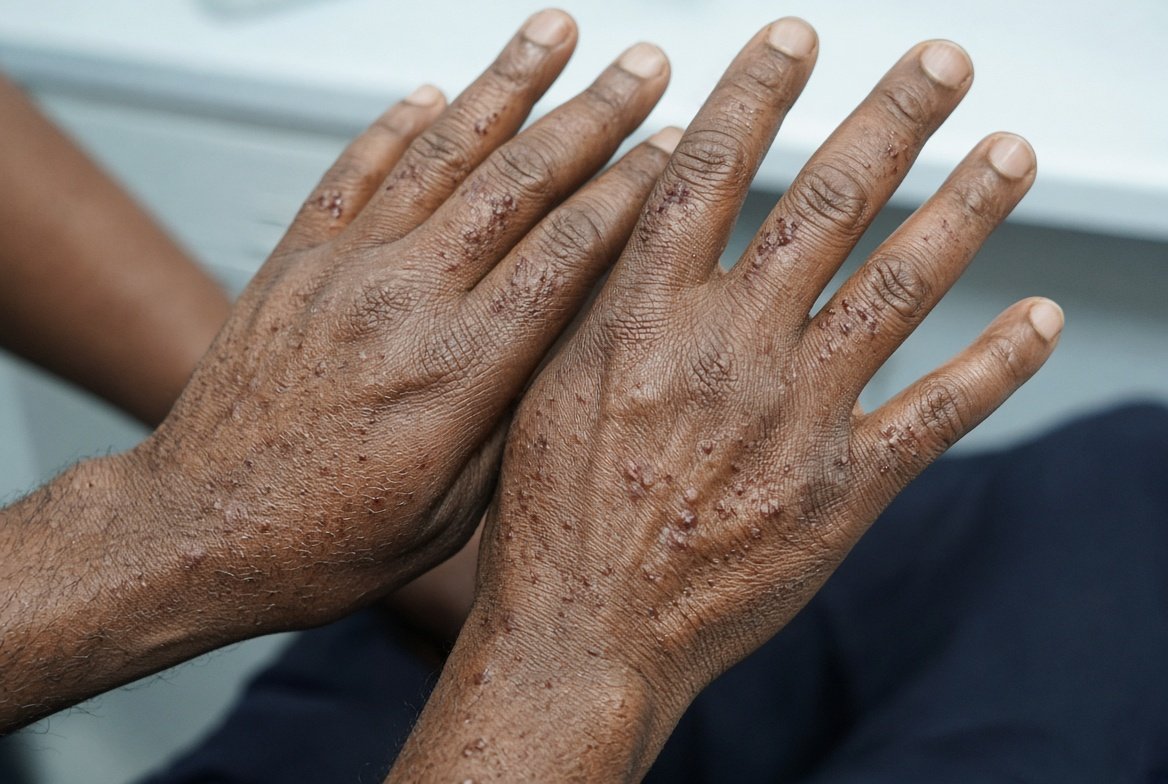
Scabies is a highly pruritic skin infestation caused by the mite Sarcoptes scabiei var. hominis. It is transmitted through prolonged direct skin to skin contact, with brief, casual contact generally insufficient for transmission.
A distinct, more severe variant, crusted (Norwegian) scabies, occurs in significantly immunocompromised or neurologically impaired individuals unable to mount an adequate scratching response. It carries substantially greater infectivity given the vastly increased mite burden.
Recognition of this distinction is required given its important implications for both individual treatment intensity and the scale of contact tracing and infection control measures required.
Pathophysiology
- Female mites burrow into the epidermis, laying eggs within the resulting burrow.
- The characteristic intense pruritus reflects a delayed type hypersensitivity response to mite antigens, faeces and eggs.
- This explains the typical delay of several weeks between initial infestation and symptom onset in a first, previously unsensitised infestation. Reinfestation in an already sensitised individual causes much more rapid onset (within days).
- Crusted scabies reflects an impaired host immune and scratching response. This occurs in advanced HIV infection, other significant immunosuppression, neurological conditions limiting normal scratching behaviour, and cognitive impairment or learning disability affecting recognition of and response to itching.
- The impaired response permits massive, largely unchecked mite proliferation. The resulting hyperkeratotic, crusted skin lesions contain extremely high numbers of mites, in marked contrast to the relatively low mite burden (typically only ten to fifteen mites) of ordinary scabies.
