









Epithelioid Haemangioendothelioma
Also known as: Epithelioid Hemangioendothelioma, EHE
Epithelioid haemangioendothelioma is a rare vascular neoplasm of intermediate to malignant behaviour, characterised by WWTR1::CAMTA1 fusion in about 90% and YAP1::TFE3 fusion in about 10%. Epithelioid endothelial cells lie in a myxohyaline stroma, and disease is often multifocal.
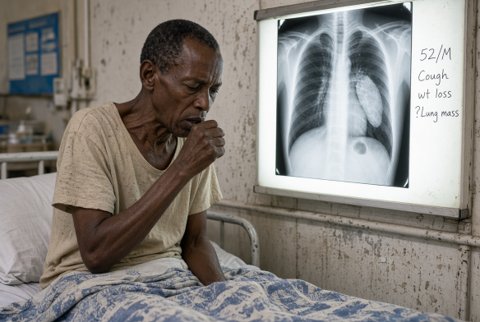
Incidence is under 1 case in 1,000,000 people each year. Median age is 30 to 50, with a female predominance in hepatic disease. Sites are the liver, lung, bone and soft tissue, and a minority involve pleura or peritoneum.
Associations in hepatic cases are oral contraceptives, vinyl chloride, liver trauma and viral hepatitis, though most are sporadic.
Pathophysiology. The fusions activate the Hippo signalling effectors TAZ and YAP, and CAMTA1 nuclear staining identifies the CAMTA1 fusion. Vascular markers (CD31, CD34, ERG) are positive.
Prognostic features. 3 or more mitoses in 50 high power fields, size over 3 cm and spindle cell morphology predict aggressive behaviour. YAP1::TFE3 tumours are more often solitary, with vasoformative features.
Behaviour. The course is highly variable: stable for many years or rapidly progressive. Five year survival is about 60% to 80%, and median survival with hepatic disease is 5 to 10 years or longer. Serosal involvement (pleural effusion, bloody ascites) predicts a poor outcome.
