










Radiation-Induced Sarcoma
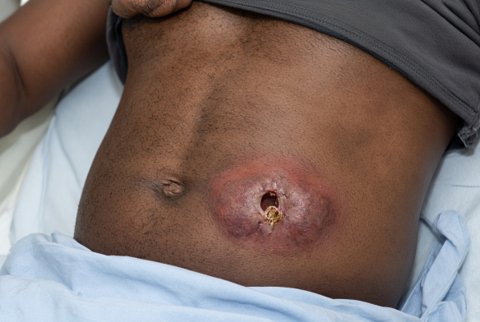
Radiation induced sarcoma is a soft tissue or bone sarcoma arising within a previously irradiated field after a latent period, with histology different from the original tumour. It is a rare late effect and is more aggressive than sporadic sarcoma.
Diagnostic criteria. Previous irradiation of the site, a latent period usually of at least 3 to 5 years (many cases arise after 10 to 15 years), tumour arising within the irradiated field, and histologically proven sarcoma that differs from the original tumour.
Epidemiology. Cumulative incidence after radiotherapy is about 0.03 to 0.8%. Risk rises with dose (usually over 20 to 30 Gy, most cases over 50 Gy) and with time. Common prior sites are breast, lymphoma, cervix, prostate and head and neck, and childhood cancers.
Types. Undifferentiated pleomorphic sarcoma, osteosarcoma, angiosarcoma (breast and chest wall), fibrosarcoma, leiomyosarcoma, malignant peripheral nerve sheath tumour and chondrosarcoma.
Prognosis. Five year survival is generally under 50% even with complete resection, and lower for angiosarcoma and unresectable disease.
Pathophysiology.
Radiation causes DNA damage and genomic instability in mesenchymal cells, with TP53 and RB1 alterations. Post-radiation angiosarcoma of the breast is characterised by MYC amplification.
Impaired local blood supply and chronic inflammation in irradiated tissue favour malignant transformation.
