


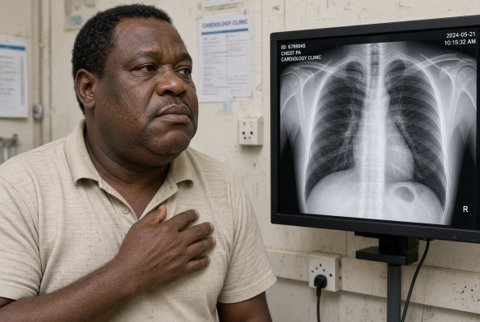









Chronic Radiation Injury
Chronic radiation injury is tissue damage that develops months to years after radiation exposure, from therapy, occupational exposure or accidents. It includes fibrosis, atrophy, telangiectasia, ulceration, necrosis, functional loss of organs, and radiation induced cancer.
Settings. Cancer radiotherapy (late effects in treated fields), interventional radiologists and cardiologists, radiographers, nuclear workers, early radiology and radium workers, and accident survivors.
Deterministic effects. Severity rises with dose and fractions over thresholds, such as skin damage over about 2 Gy, cataract, infertility and organ fibrosis. They occur after a threshold dose.
Stochastic effects. Cancer and heritable effects have no threshold, and risk rises with dose. Latency is 5 to 10 years for leukaemia and longer for solid tumours.
Common syndromes. Chronic radiodermatitis, fibrosis of lung and soft tissue, radiation proctitis and cystitis, enteritis, osteoradionecrosis, myelopathy, hypothyroidism and secondary malignancy.
Occupational limits. Whole body effective dose limits are about 20 mSv/year averaged over 5 years, with no single year over 50 mSv.
Pathophysiology.
Radiation causes endothelial injury, microvascular loss, chronic inflammation with TGF-beta driven fibrosis, and impaired stem cell regeneration. Hypoxia and ongoing oxidative stress perpetuate injury.
Late tissue necrosis follows vascular compromise. Mutations in irradiated cells underlie later cancers.
