










Radiation Dermatitis
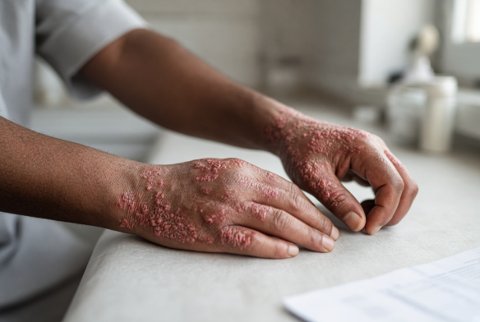
Radiation dermatitis is skin injury from ionising radiation. It occurs in 85 to 95 percent of patients receiving breast, head and neck, or chest wall radiotherapy, and after interventional fluoroscopy, accidental exposure and radiological incidents. Radiation damages basal keratinocytes, hair follicles, sebaceous and sweat glands, and dermal vasculature, and triggers an inflammatory cytokine cascade.
Acute injury appears within 90 days. Erythema occurs after about 2 Gy, dry desquamation after 8 to 12 Gy, moist desquamation after 15 to 20 Gy, and ulceration and necrosis with doses above 25 Gy.
Chronic changes appear months to years later: atrophy, telangiectasia, fibrosis, hyperpigmentation or hypopigmentation, and late ulceration.
Risk factors are:
- skin folds
- large breasts
- obesity
- smoking
- concurrent chemotherapy (taxanes, anthracyclines)
- cetuximab
- connective tissue disease
Radiation recall can follow later chemotherapy in a previously irradiated field.
