








Haemopneumothorax
Also known as: Hemopneumothorax
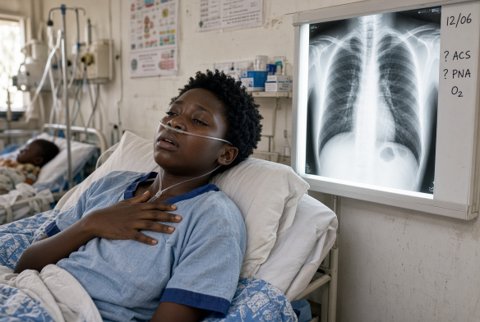
Haemopneumothorax is the presence of air and blood together in the pleural space. It is most often due to chest trauma (penetrating or blunt, with rib fracture) and occurs in about a third of those with significant thoracic injury. It may also be spontaneous, or follow a procedure.
Spontaneous haemopneumothorax is found in about 1 to 12% of spontaneous pneumothorax, mostly in young men, from rupture of a vascularised adhesion between the visceral and parietal pleura, or of an apical bulla. Other causes include central line placement, pleural biopsy, anticoagulation, endometriosis and malignancy.
Pathophysiology. Lung laceration (low pressure bleeding that often stops by itself) or injury to the intercostal or internal mammary arteries and the chest wall (high pressure, ongoing bleeding) fills the pleural cavity with blood, while air enters through the lung or chest wall. Blood and air collapse the lung and shift the mediastinum if the volume is large. Retained clot becomes fibrous and traps the lung.
