












Mixed Acid Base Disorder
Also known as: Mixed acid-base disturbance
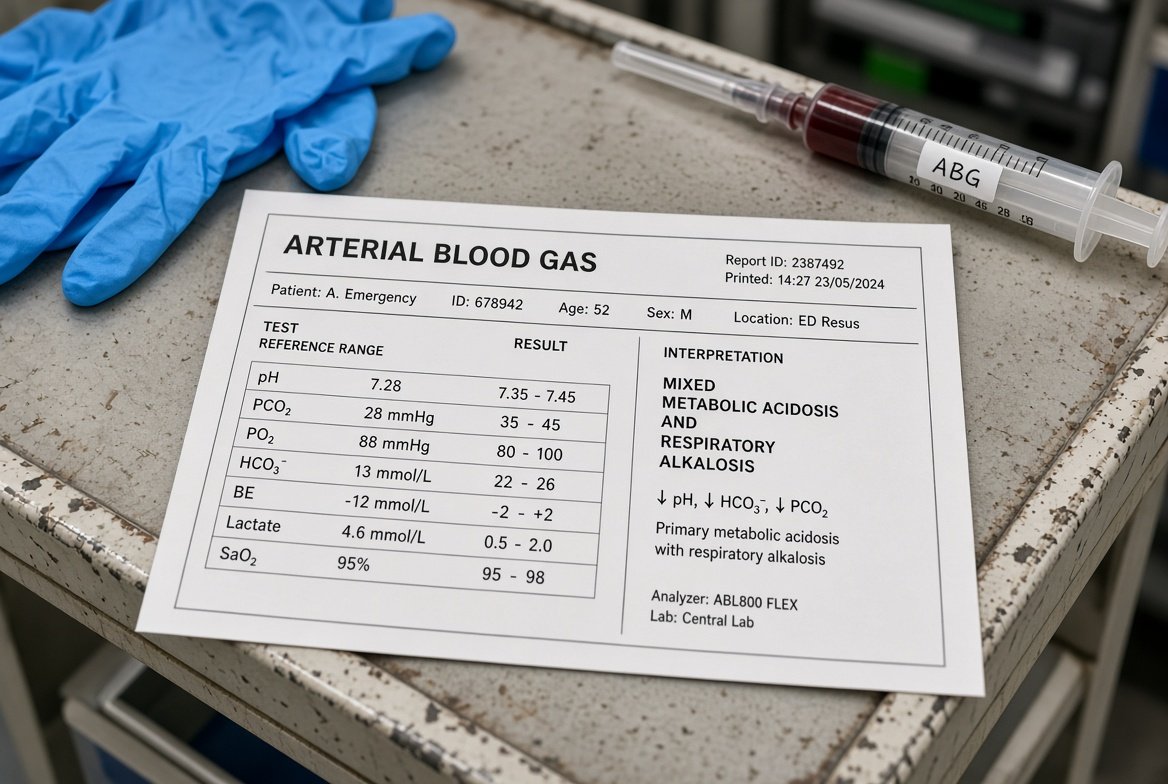
A mixed acid-base disorder is the presence of two or more primary disturbances at the same time. These are common in seriously ill patients and are frequently missed, because the pH may look normal or only mildly deranged while two significant opposing processes are in play.
Recognising them matters because each component may need separate treatment, and because a "normal" pH in a sick patient can be falsely reassuring.
Classic combinations include: the vomiting patient with diabetic ketoacidosis (metabolic acidosis plus metabolic alkalosis), salicylate poisoning (respiratory alkalosis plus raised anion gap metabolic acidosis), the exhausted asthmatic (respiratory acidosis in a patient who should be hyperventilating), severe sepsis with hepatic dysfunction, and the COPD patient on diuretics (respiratory acidosis plus metabolic alkalosis).
A normal pH does not exclude significant acid-base derangement, and this is the single most useful principle to carry into gas interpretation.
