Hungry Bone Syndrome
Also known as: Hungry bone disease
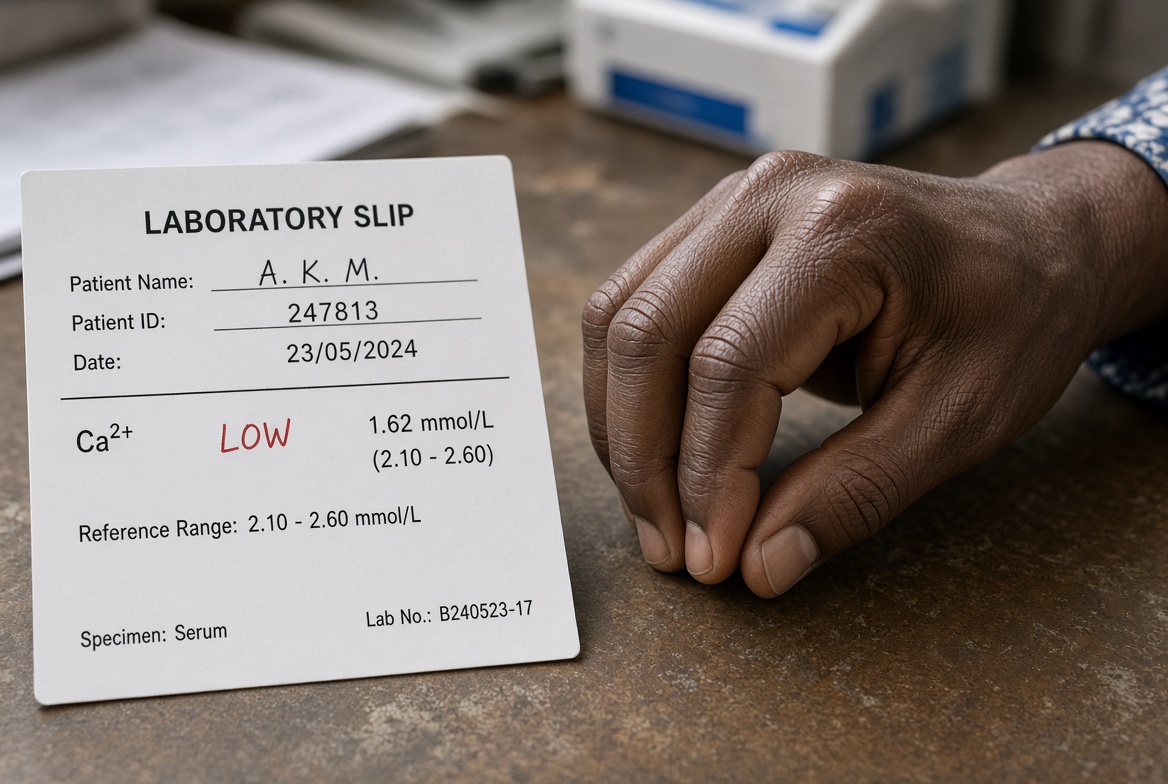
Hungry bone syndrome is a profound, prolonged hypocalcaemia occurring after correction of long-standing hyperparathyroidism, most often following parathyroidectomy, and occasionally after treatment of severe thyrotoxicosis or correction of severe vitamin D deficiency.
The mechanism is a sudden reversal of bone turnover. Chronically elevated PTH drives high bone resorption; when it is abruptly removed, bone formation continues unopposed and the skeleton rapidly takes up calcium, phosphate and magnesium from the circulation.
The result is a hypocalcaemia that is both deeper and far more prolonged than the transient hypocalcaemia of routine post-thyroidectomy hypoparathyroidism, sometimes lasting weeks to months and requiring very large replacement doses.
Distinguishing it from post-surgical hypoparathyroidism matters, because the two look similar initially but differ in phosphate: hungry bone syndrome lowers phosphate and magnesium alongside calcium, whereas hypoparathyroidism raises phosphate.