











Massive Transfusion Syndrome
Massive transfusion syndrome is the group of metabolic, haematological and haemodynamic complications that follow replacement of the circulating blood volume, defined as 10 or more units of red cells in 24 hours, 4 or more units in 1 hour with ongoing bleeding, or replacement of over 50% of blood volume within 3 hours.
Epidemiology. Massive transfusion is needed in about 1 to 3% of civilian trauma admissions, and in obstetric, vascular and gastrointestinal haemorrhage. Mortality is 20 to 40%.
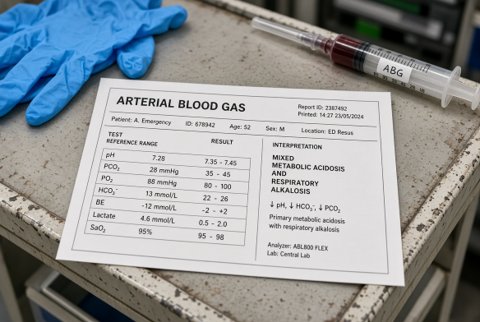
Complications. Dilutional coagulopathy and thrombocytopenia, hypofibrinogenaemia, hypothermia, acidosis, citrate toxicity with hypocalcaemia and hypomagnesaemia, hyperkalaemia (and later hypokalaemia), transfusion related acute lung injury, transfusion associated circulatory overload, haemolytic reactions, hypocalcaemia related myocardial depression and arrhythmia.
Lethal triad. Hypothermia, acidosis and coagulopathy reinforce each other.
Pathophysiology. Stored blood is cold, acidic, low in platelets, fibrinogen and factors V and VIII, high in potassium and rich in citrate. Citrate binds calcium and is normally metabolised by the liver, but shock and rapid transfusion overwhelm this.
