


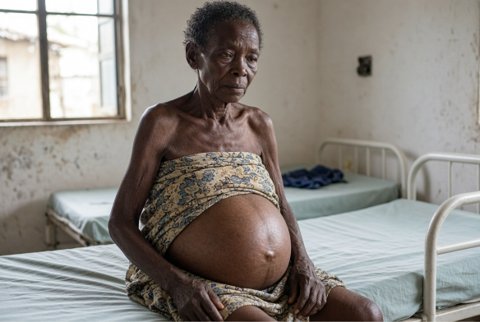









Osteitis Fibrosa Cystica
Also known as: Osteitis Fibrosa
Osteitis fibrosa cystica is the florid skeletal lesion of prolonged, severe hyperparathyroidism. Excess parathyroid hormone drives osteoclastic resorption of cortical and trabecular bone, with replacement of marrow by fibrous tissue and, in advanced disease, cyst like lytic lesions containing haemosiderin and giant cells (brown tumours).
In chronic kidney disease it is the histological expression of high turnover renal osteodystrophy in untreated or refractory secondary and tertiary hyperparathyroidism. It was once common in dialysis patients and is now found mainly in poorly controlled disease, late referral and parathyroid hormone values more than 9 times the upper limit of normal.
Pathophysiology. Sustained parathyroid hormone excess increases osteoclast number and activity and stimulates osteoblasts, producing woven bone and peritrabecular fibrosis. Bone is mechanically weak, with a high fracture risk, and mineral is mobilised into the circulation, worsening hypercalcaemia and soft tissue calcification.
