



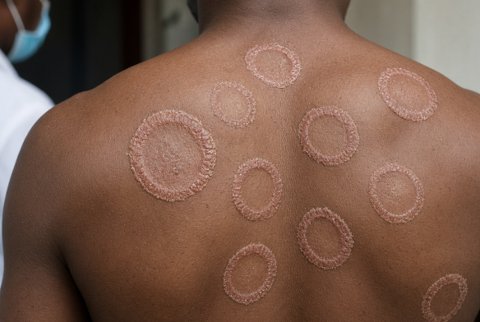








Pityriasis Lichenoides Chronica
Also known as: PLC
Pityriasis lichenoides chronica is a chronic papulosquamous eruption of small, red brown, scaly papules that arise in crops and heal with pigment change. It is the milder end of a spectrum with pityriasis lichenoides et varioliformis acuta.
It affects children and young adults, with a slight male predominance, and has a prolonged, relapsing course that often lasts months to years. It usually resolves spontaneously, and most cases settle within a few years.
The cause is unknown. Proposed triggers are infections (Epstein-Barr virus, parvovirus B19, Toxoplasma gondii) and drugs, and some cases show clonal T-cell populations without progression to lymphoma in most patients.
Pathophysiology.
The disease is a T-cell mediated lymphocytic inflammatory reaction, with a predominance of CD8 positive cells, that targets the dermal vessels and the epidermis. This causes interface change, extravasation of red cells and parakeratosis.
