


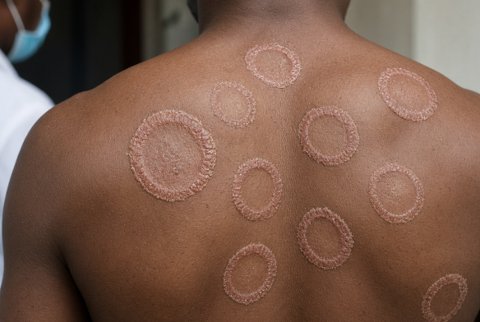









Hypertrophic Lichen Planus
Also known as: Lichen Planus Hypertrophicus
Hypertrophic lichen planus is a variant of lichen planus with thick, hyperkeratotic, violaceous or brown plaques, most often on the shins and ankles, and with intense itch. It is chronic and can persist for years.
Lichen planus affects about 0.2 to 1% of people, mostly in middle age, and the hypertrophic form is a minority, most frequent in men. It is more common in people with hepatitis C infection.
Triggers and associations include hepatitis B and C, drugs (angiotensin converting enzyme inhibitors, thiazides, beta blockers, non-steroidal anti-inflammatory drugs, antimalarials and gold), contact allergy to metals, and stress. A small proportion of long standing hypertrophic plaques develops squamous cell carcinoma.
Pathophysiology.
Cytotoxic T cells attack basal keratinocytes in an interface reaction. Chronic scratching causes epidermal thickening, hypergranulosis and hyperkeratosis, and the dermal infiltrate is band like. Persistent antigen exposure and local trauma sustain the hypertrophic form.
