












Abdominal pain in pregnancy
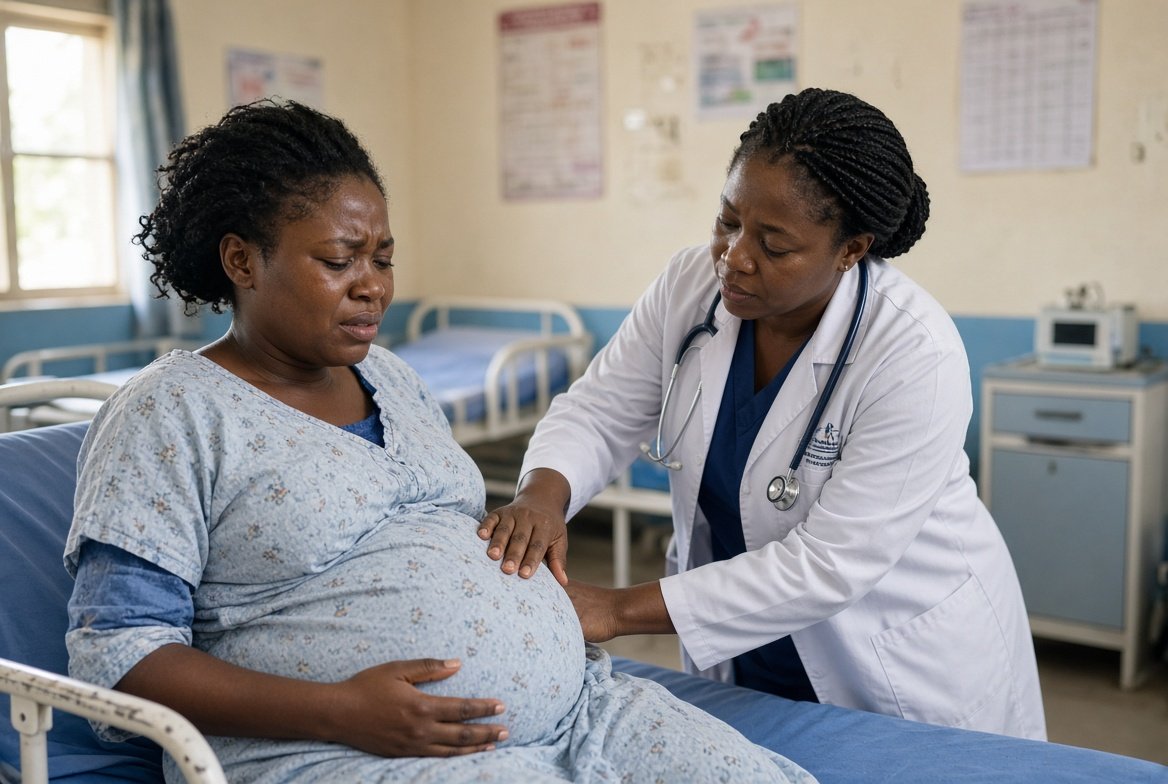
Abdominal pain in pregnancy is pain felt in the abdomen or pelvis at any time from conception to the birth of the baby. Causes include both obstetric and non obstetric conditions.
The physiology of pregnancy alters symptoms, signs and normal laboratory values. Delay in diagnosis threatens both the mother and the foetus.
The clinician excludes:
- Early pregnancy: ectopic pregnancy and miscarriage
- Later pregnancy: obstetric emergencies (abruption, uterine rupture, pre eclampsia with HELLP syndrome, acute fatty liver, preterm labour)
- Throughout: surgical, medical and urinary causes
Clinical relevance. Most pain is benign (round ligament pain, constipation, Braxton Hicks contractions), but a small proportion signals life threatening disease. Imaging should not be withheld when it is needed for the mother's care.
Anatomy and physiology. The uterus becomes an abdominal organ after 12 weeks and displaces the appendix, bowel, bladder and ureters. The appendix moves upward and laterally, so pain from appendicitis is often higher than McBurney point. The gravid uterus reduces the sensitivity of peritoneal signs.
Laboratory changes:
- The leucocyte count rises (up to 15 x 10^9/L in pregnancy, higher in labour)
- Alkaline phosphatase rises (placental source)
- Creatinine falls (usual value 40 to 75 micromol/L; over 90 micromol/L is abnormal)
- Bicarbonate falls to 18 to 22 mmol/L with a compensated respiratory alkalosis (carbon dioxide about 4 kPa)
- D dimer rises
Mechanisms. Visceral pain from stretching, ischaemia, inflammation or obstruction. Somatic pain from peritoneal irritation. Referred pain from the diaphragm, kidney or ovary. Uterine pain from contraction, separation of the placenta, rupture or infection.
Classification by trimester.
- First trimester: ectopic pregnancy, miscarriage, ovarian cyst accident, urinary infection, appendicitis
- Second and third trimesters: round ligament pain, Braxton Hicks contractions, preterm labour, abruption, pre eclampsia and HELLP syndrome, acute fatty liver, fibroid degeneration, pyelonephritis
- At any time: appendicitis, cholecystitis, pancreatitis, bowel obstruction, torsion, sickle cell crisis, trauma and abuse
Key distinctions.
- Pain with vaginal bleeding and shock in early pregnancy is ruptured ectopic pregnancy until proved otherwise.
- Constant pain with a hard tender uterus suggests abruption.
- Right upper quadrant or epigastric pain in the third trimester with hypertension suggests HELLP syndrome.
- Colicky pain with cervical change suggests labour.
- Severe pain with systemic upset needs surgical review whatever the gestation.
History
- Gestation, number of foetuses, symptoms of pregnancy.
- Pain: onset (sudden, gradual), site, radiation (shoulder tip, back, groin), character (colicky, constant, sharp), severity, timing, relation to meals, movement, micturition, opening of the bowels, contractions.
- Associated: vaginal bleeding or fluid leakage, foetal movements, fever, rigors, vomiting, diarrhoea, constipation, dysuria, frequency, haematuria, jaundice, pruritus, headache, visual disturbance, breathlessness, chest pain, leg swelling, syncope.
- Obstetric: previous ectopic pregnancy, caesarean section or uterine scar, fibroids, ovarian cysts, preterm birth, assisted conception, intrauterine device in situ.
- Medical: gallstones, peptic ulcer, inflammatory bowel disease, hernia, sickle cell disease, hypertension, diabetes, previous abdominal surgery, renal stones, hyperlipidaemia, porphyria, lupus, thrombophilia.
- Drugs: anticoagulants, NSAIDs, opioids, iron, antibiotics, cocaine and other drugs.
- Social: abuse, trauma, travel, malaria exposure, contacts with infection, diet.
Examination
- Vital signs, with recognition that pregnancy raises the pulse by 10 to 20 beats/min and lowers the blood pressure in the second trimester. Use the shock index (over 0.9 concerning).
- General: pallor, jaundice, hydration, temperature, respiratory rate.
- Abdomen: fundal height, uterine tone, tenderness (localised or generalised), guarding, rebound (less reliable in late pregnancy), masses, scars, hernias, renal angle tenderness, Murphy sign (shifted upward in pregnancy).
- Foetal heart, cardiotocography from viability, and foetal movements.
- Pelvic: speculum and digital examination for cervical change, bleeding and discharge (not if placenta praevia has not been excluded).
- Chest, heart, calves (for pulmonary embolism), reflexes and clonus (pre eclampsia).
- Bedside tests: urine dipstick (protein, nitrites, leucocytes, blood, ketones), capillary glucose, urine pregnancy test in early pregnancy, point of care ultrasound.
Red flags
- Haemodynamic instability, shoulder tip pain, peritonism, or syncope with a positive pregnancy test (ruptured ectopic pregnancy).
- Constant severe pain with a tense uterus, bleeding or abnormal cardiotocography (abruption, uterine rupture).
- Severe hypertension, headache, visual disturbance or epigastric pain in the second half of pregnancy (pre eclampsia, HELLP syndrome).
- Jaundice, vomiting, confusion, hypoglycaemia in the third trimester (acute fatty liver of pregnancy).
- Fever with rigors, peritonism or guarding (appendicitis, cholecystitis, sepsis, chorioamnionitis).
- Regular painful contractions before 37 weeks with cervical change.
- Severe pain out of proportion to signs, vomiting, and a palpable adnexal mass (torsion).
- Pain with a previous caesarean scar, scar tenderness, loss of the presenting part, abnormal foetal heart (uterine rupture).
- Sudden severe tearing pain with hypertension or connective tissue disease (aortic dissection), or splenic artery aneurysm rupture in the third trimester.
- Pleuritic pain or breathlessness (pulmonary embolism).
- Pregnancy under 16 years, unbooked, domestic abuse.
Special groups. Sickle cell disease: pain crisis, acute chest syndrome and infection. Previous caesarean section: scar dehiscence and rupture. Fibroids: red degeneration, most often in the second trimester. Obese women: reliance on ultrasound and imaging. Region specific: malaria, typhoid, hepatitis E and amoebic abscess.
Organised by system. Each cause is common unless marked serious or uncommon. Obstetric and gynaecological
- Round ligament pain and Braxton Hicks contractions.
- Preterm labour and term labour.
- Serious: placental abruption.
- Serious: uterine rupture, and scar dehiscence.
- Serious: ruptured ectopic pregnancy (first trimester), heterotopic pregnancy.
- Miscarriage (threatened, incomplete, septic).
- Serious: pre eclampsia, HELLP syndrome and eclampsia.
- Serious: acute fatty liver of pregnancy.
- Chorioamnionitis, endometritis (postpartum).
- Fibroid degeneration and torsion of pedunculated fibroid.
- Ovarian cyst rupture or haemorrhage, corpus luteum haemorrhage, ovarian torsion.
- Ovarian hyperstimulation syndrome after fertility treatment.
- Symphysis pubis dysfunction and pelvic girdle pain.
- Uterine torsion, uterine rupture from instrumentation, and sacculation of a retroverted uterus (incarceration, first and early second trimester).
- Ovarian vein thrombosis.
- Pelvic inflammatory disease (rare after the first trimester).
- Intrahepatic cholestasis of pregnancy (pruritus predominates, pain unusual).
Gastrointestinal
- Constipation, gastro oesophageal reflux disease, gastroenteritis, peptic ulcer.
- Serious: appendicitis.
- Cholecystitis, biliary colic and cholangitis.
- Serious: acute pancreatitis (gallstones, hypertriglyceridaemia).
- Serious: bowel obstruction (adhesions, volvulus), perforation.
- Inflammatory bowel disease flare, diverticulitis (uncommon).
- Hernia (incarcerated or strangulated), irritable bowel syndrome.
- Hepatitis (A, B, E), hepatic abscess, Budd Chiari syndrome.
- Mesenteric ischaemia and mesenteric vein thrombosis (rare).
Urinary
- Cystitis, asymptomatic bacteriuria progressing to pyelonephritis.
- Ureteric colic and hydronephrosis of pregnancy.
- Bladder distension, urinary retention.
Vascular and haematological
- Serious: splenic artery aneurysm rupture, aortic dissection, spontaneous coronary artery dissection (referred epigastric pain).
- Serious: pulmonary embolism, and lower lobe pneumonia.
- Sickle cell crisis, haemolysis.
- Rectus sheath haematoma (anticoagulation, coughing).
- Porphyria (acute intermittent), diabetic ketoacidosis, hypercalcaemia.
Musculoskeletal and other
- Lumbar and pelvic girdle pain, rib pain, abdominal wall pain, diastasis recti.
- Herpes zoster before the rash.
- Trauma and domestic abuse, bowel injury.
- Malaria, typhoid fever, dengue, leptospirosis in endemic regions.
Stepwise reasoning
- Resuscitate and check the foetal heart.
- Place the pain by gestation: early pregnancy (ectopic, miscarriage), second half (obstetric causes), any time (surgical, medical, urinary).
- Obtain blood and urine tests with trimester specific ranges.
- Use ultrasound first, then MRI without gadolinium. Use CT without delay when the mother's life is at risk or the diagnosis is uncertain.
- Involve obstetrics and surgery together. Do not delay surgery for a surgical condition because of the pregnancy.
First line tests
- Urine pregnancy test (early pregnancy), serum beta hCG, ultrasound for location and viability.
- Full blood count (leucocytes up to 15 x 10^9/L normal, up to 25 to 30 x 10^9/L in labour; a left shift or rising count is meaningful), C reactive protein, group and save, and crossmatch if unstable.
- Urea, creatinine, electrolytes, bicarbonate, glucose, liver function tests (alkaline phosphatase is normally raised), amylase or lipase, calcium, uric acid, lactate dehydrogenase, lactate.
- Coagulation screen with fibrinogen when abruption, HELLP syndrome or fatty liver is possible.
- Urine dipstick, midstream urine culture, and protein to creatinine ratio.
- Blood cultures if febrile; malaria rapid test and film in endemic regions.
- Cardiotocography from viability.
- Electrocardiogram and troponin for epigastric pain with risk factors.
Interpretation of pre eclampsia and liver tests
- Pre eclampsia: blood pressure 140/90 mmHg or more after 20 weeks, plus proteinuria (protein to creatinine ratio over 30 mg/mmol), or end organ dysfunction.
- HELLP syndrome: haemolysis (raised lactate dehydrogenase over 600 IU/L, schistocytes, low haptoglobin), aspartate or alanine aminotransferase over 70 IU/L, and platelets under 100 x 10^9/L.
- Acute fatty liver of pregnancy: six or more of the following. Vomiting, abdominal pain, polydipsia or polyuria, encephalopathy, bilirubin over 14 micromol/L, hypoglycaemia (under 4 mmol/L), uric acid over 340 micromol/L, leucocytosis over 11 x 10^9/L, ascites or bright liver on ultrasound, aminotransferases over 42 IU/L, ammonia over 47 micromol/L, creatinine over 150 micromol/L, coagulopathy (prothrombin time over 14 seconds or activated partial thromboplastin time over 34 seconds), and microvesicular steatosis on biopsy.
- Intrahepatic cholestasis: fasting serum bile acids over 10 micromol/L.
Imaging
- Ultrasound is the first test for appendicitis (graded compression), cholecystitis, pancreatitis, hydronephrosis, ovarian torsion and fibroids. The appendix is often not visible in late pregnancy.
- MRI without gadolinium when ultrasound is inconclusive, for appendicitis, bowel obstruction, pancreatitis, fibroid degeneration and accreta spectrum.
- CT when ultrasound and MRI are not available or the diagnosis is urgent. Foetal radiation from CT of the abdomen and pelvis is about 10 to 25 mGy, which is under the 50 mGy level where harm is considered.
- Never withhold diagnostic imaging when it will change care. Use CT pulmonary angiography or ventilation perfusion scanning for pulmonary embolism, and CT angiography for dissection.
- Plain abdominal film for obstruction only when other imaging is unavailable.
Targeted tests
- Diagnostic laparoscopy (safe in any trimester) for undiagnosed pain.
- Endoscopy for gastrointestinal bleeding or suspected peptic ulcer; endoscopic retrograde cholangiopancreatography for cholangitis or stone pancreatitis.
- Haemoglobin electrophoresis if sickle cell disease is suspected.
- Serology for hepatitis; porphobilinogen in the urine for acute porphyria.
- Abdominal paracentesis for ascites.
Limitations. Peritoneal signs are blunted in late pregnancy. White count, alkaline phosphatase, D dimer and amylase are altered by pregnancy. Ultrasound can miss appendicitis, torsion and abruption. Imaging delay increases the risk of perforation and foetal loss.
Immediate steps. Stabilise airway, breathing and circulation. Insert intravenous access, use left lateral tilt after 20 weeks, give oxygen if saturation is under 94%, send blood tests, and give crystalloid in 250 to 500 mL aliquots for hypotension. Request senior obstetric, anaesthetic and surgical review if peritonism, shock or abnormal foetal heart. Treat ruptured ectopic pregnancy, abruption, uterine rupture and torsion as emergencies.
Analgesia in pregnancy
- Paracetamol 1 g orally or intravenously every 4 to 6 hours, maximum 4 g daily (3 g daily with chronic alcohol use, malnutrition or hepatic impairment; 15 mg/kg each dose under 50 kg).
- Opioid for severe pain: morphine 2 to 5 mg intravenously every 5 to 10 minutes titrated to effect, or 5 to 10 mg subcutaneously or intramuscularly every 4 hours. Reduce the dose in renal impairment and older age. Warn the neonatal team of use close to birth.
- NSAIDs: avoid from 20 weeks (reduced foetal renal function and low liquor). From 30 weeks avoid because of risk of premature closure of the ductus arteriosus. Before 20 weeks a short course at the lowest dose is acceptable (ibuprofen 400 mg every 8 hours with food, maximum 1.2 g daily for this purpose). This differs deliberately from the adult maximum of 2.4 g daily.
- Antiemetic: cyclizine 50 mg intravenously or orally every 8 hours (maximum 150 mg daily) or ondansetron 4 mg intravenously every 8 hours (maximum 16 mg daily).
- Antispasmodics: hyoscine butylbromide 20 mg intravenously or orally, maximum 80 mg daily, is used for colic.
Ectopic pregnancy, miscarriage and early pregnancy causes. Resuscitation, and surgery for rupture. Methotrexate for stable women: 50 mg/m2 body surface area intramuscularly as a single dose, with a second dose if beta hCG falls by less than 15% between day 4 and day 7. Criteria: mass under 35 mm, no foetal cardiac activity, beta hCG under 5000 IU/L. It is contraindicated in breastfeeding and in active infection, renal, hepatic or haematological disease. Give anti D immunoglobulin 250 IU intramuscularly within 72 hours to rhesus negative women.
Appendicitis. Surgical review. Appendicectomy (laparoscopic or open) is the definitive treatment, with the incision placed over the point of maximal tenderness. Antibiotics: ceftriaxone 2 g intravenously once daily with metronidazole 500 mg intravenously every 8 hours. Continue after surgery for 24 hours if simple, and for 3 to 5 days if perforated or gangrenous. Delay raises the risk of perforation, preterm labour and foetal loss. Non operative management with antibiotics is not advised in pregnancy because evidence is limited.
Cholecystitis and biliary disease. Intravenous fluids, analgesia and antibiotics (ceftriaxone 2 g intravenously once daily with metronidazole 500 mg intravenously every 8 hours). Laparoscopic cholecystectomy in any trimester for persistent or recurrent disease. Endoscopic sphincterotomy with limited radiation for cholangitis or gallstone pancreatitis with obstruction.
Pancreatitis. Fluids, analgesia, nutrition, and treat the cause (cholecystectomy, hypertriglyceridaemia management with insulin infusion or plasmapheresis, stopping offending drugs).
Urinary tract infection and pyelonephritis.
- Pyelonephritis: admit and give ceftriaxone 1 to 2 g intravenously once daily, with intravenous fluid, until afebrile for 24 to 48 hours. Then give oral cefalexin 500 mg every 6 hours to complete 10 to 14 days.
- Follow with suppressive therapy for the rest of pregnancy: cefalexin 250 to 500 mg at night, or nitrofurantoin 100 mg modified release at night. Avoid nitrofurantoin in the last weeks of pregnancy, in early pregnancy where possible, and with glucose 6 phosphate dehydrogenase deficiency.
- Avoid fluoroquinolones, tetracyclines and trimethoprim in the first trimester.
- Cystitis: cefalexin 500 mg orally every 12 hours for 5 to 7 days, or amoxicillin by culture.
Pre eclampsia, HELLP syndrome and eclampsia
- Admit. Control severe hypertension (160/110 mmHg or more) within 30 to 60 minutes. Aim for systolic 140 to 150 mmHg and diastolic 90 to 100 mmHg.
- Oral labetalol 200 mg, repeated once after 30 minutes if needed, then 200 mg two to three times daily (maximum 2400 mg daily).
- Intravenous labetalol 20 mg over 2 minutes then 40 mg, 80 mg and 80 mg at 10 minute intervals to a total of 220 mg, or an infusion of 20 mg/h doubled every 30 minutes to a maximum of 160 mg/h. Avoid labetalol in asthma and heart block.
- Nifedipine immediate release 10 mg orally, repeated after 30 minutes (maximum 30 mg in the initial period; not sublingual).
- Hydralazine 5 mg intravenously over 5 to 10 minutes, repeated at 20 minutes, maximum 20 mg.
- Magnesium sulphate for severe disease or eclampsia: 4 g intravenously over 5 to 15 minutes, then 1 g/h for 24 hours after birth or the last seizure. For a recurrent seizure give 2 g over 5 minutes.
- Monitor respiratory rate (over 12 breaths/min), oxygen saturation, patellar reflexes, urine output (over 0.5 mL/kg/h). In renal impairment reduce maintenance to 0.5 g/h and check levels (therapeutic 2 to 4 mmol/L). Antidote: calcium gluconate 10% 10 mL (1 g) intravenously over 10 minutes.
- Corticosteroids for foetal lung maturity if under 34 weeks (and up to 36 weeks and 6 days by specialist decision).
- Delivery is the definitive treatment. Timing is by gestation and severity, and often within 24 to 48 hours in HELLP syndrome.
- Platelet transfusion to keep over 50 x 10^9/L for caesarean section.
Acute fatty liver of pregnancy. Stabilise, give glucose, correct coagulopathy (fresh frozen plasma, cryoprecipitate, vitamin K 10 mg intravenously), and deliver promptly. Intensive care and hepatology. Monitor glucose hourly. Consider liver transplantation for fulminant failure.
Abruption and uterine rupture. Resuscitate. Deliver by caesarean section in unstable mother or abnormal foetal heart. Laparotomy for rupture.
Preterm labour. Cervical change with regular contractions before 37 weeks: admit.
- Corticosteroids (betamethasone 12 mg intramuscularly twice, 24 hours apart)
- Magnesium sulphate for neuroprotection before 30 weeks (4 g intravenously then 1 g/h)
- Tocolysis with nifedipine 20 mg orally then 10 to 20 mg every 6 to 8 hours (maximum 160 mg daily) for up to 48 hours (not with hypertension, heart disease, or intra uterine infection)
- Antibiotics only if membranes are ruptured
Torsion and cyst accident. Laparoscopy with detorsion and ovarian preservation. Surgery in the second trimester when possible, but torsion is not delayed.
Fibroid degeneration. Rest, hydration, paracetamol, opioids as needed, and short course ibuprofen 400 mg every 8 hours before 20 weeks only. It resolves in 3 to 7 days; surgery is not usual.
Constipation and reflux. Lactulose 15 mL orally twice daily or macrogol 3350 with electrolytes 1 to 2 sachets daily; omeprazole 20 mg orally once daily or antacids.
Pelvic girdle pain. Physiotherapy, pelvic support belt, paracetamol, and avoiding aggravating movements.
Sickle cell crisis. Hydration, oxygen to keep saturation over 95%, early morphine, antibiotics for infection, enoxaparin prophylaxis, and exchange transfusion for acute chest syndrome, in a unit with haematology.
Pulmonary embolism. Enoxaparin 1 mg/kg subcutaneously every 12 hours (reduce to 1 mg/kg once daily for creatinine clearance under 30 mL/min), or unfractionated heparin 80 units/kg bolus and 18 units/kg/h infusion with adjustment to anti Xa or activated partial thromboplastin time. Continue through pregnancy and for at least 6 weeks after birth, with total therapy of at least 3 months.
Malaria and infection. Treat promptly. Artemether with lumefantrine is used in the second and third trimesters. For severe malaria give artesunate intravenously 2.4 mg/kg at 0, 12 and 24 hours then daily.
Trauma and abuse. Primary and secondary survey, left tilt, cardiotocography at least 4 hours, Kleihauer test, anti D, referral for protection and support.
Special groups.
- Teenagers: confidentiality and child protection
- Women with a uterine scar: low threshold for rupture
- Women with HIV: continue antiretroviral therapy
Monitoring. Repeat vital signs every 15 minutes while unstable, hourly later, urine output, serial abdominal examination by the same clinician, cardiotocography, and repeat bloods (haemoglobin, platelets, liver function, creatinine) at 6 to 12 hours when HELLP syndrome or fatty liver is possible.
Referral and escalation. Refer the same day to obstetrics for any pain after 20 weeks that is persistent, with bleeding, abnormal foetal heart, contractions or hypertension. Call surgery for suspected appendicitis, cholecystitis, obstruction or perforation. Call critical care for sepsis, pre eclampsia with organ dysfunction or acute fatty liver. Call haematology for sickle cell disease and coagulopathy.
Admission criteria. Haemodynamic instability, peritonism, fever, persistent pain not explained, hypertension with symptoms, abnormal foetal heart or movements, vaginal bleeding, preterm contractions, vomiting that prevents oral intake, or any suspicion of a surgical emergency.
Discharge and follow up. Discharge when pain has resolved or a benign cause is confirmed, the foetal heart is normal and the woman can return quickly. Arrange antenatal review within 48 hours, and give written advice.
Safety netting. Return for worsening or constant pain, vaginal bleeding, leakage of fluid, reduced foetal movements, fever, vomiting, headache, visual disturbance, breathlessness or fainting.
