



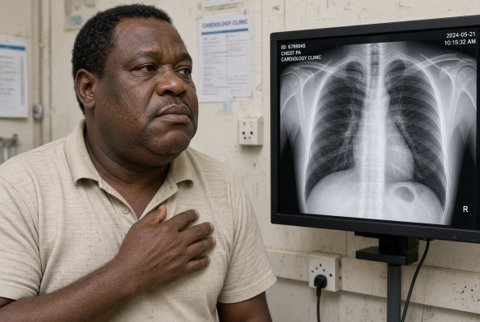








Pulmonary Amyloidosis
Also known as: Pulmonary Amyloid
Pulmonary amyloidosis is deposition of amyloid in the lung parenchyma and interstitium, either localised or as part of systemic disease. The forms are nodular (usually a single or several nodules from local light chain production), diffuse alveolar septal (usually systemic AL amyloidosis), and pleural.
The amyloid is of light chain type (AL) in most, and transthyretin amyloid can affect the lung less often. Diffuse disease is a marker of systemic disease with cardiac and renal involvement, and has a poor outlook, while the nodular form is benign.
Pathophysiology. Misfolded proteins (immunoglobulin light chains, or transthyretin) aggregate into beta sheet fibrils that deposit in the alveolar septa and vessel walls, impairing gas exchange and compliance. In the nodular form, a local clone of plasma cells makes the light chains, and it can be linked to marginal zone lymphoma and Sjogren syndrome.
