
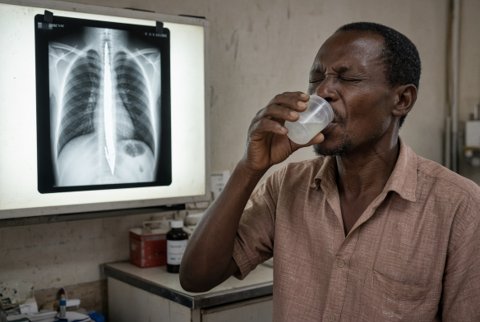











Pulmonary Artery Aneurysm
Also known as: PAA
Pulmonary artery aneurysm is a localised dilatation of the main, lobar or segmental pulmonary arteries. It is rare, found in about 1 in 14,000 autopsies, and defined by a main pulmonary artery diameter over 4 cm (normal under 3 cm), or a focal saccular dilatation of a branch vessel.
Causes are congenital heart disease (patent ductus arteriosus, atrial septal defect, pulmonary valve stenosis with post-stenotic dilatation), pulmonary hypertension, connective tissue disease (Marfan syndrome, Ehlers-Danlos syndrome), vasculitis (Behçet disease, Hughes-Stovin syndrome, Takayasu arteritis), infection (tuberculosis, syphilis, fungal and septic emboli), trauma, catheter injury and idiopathic disease. Behçet disease is the commonest cause of peripheral aneurysm in young men from endemic regions.
Pathophysiology. A weak or inflamed arterial wall (loss of elastic lamina and smooth muscle) dilates under pulmonary pressure. In vasculitis, perivascular inflammation destroys the media, while in pulmonary hypertension, high pressure and flow stretch the wall. The aneurysm may thrombose, dissect or rupture into the airway or pleura.
