











Acute Hypoxaemic Respiratory Failure
Also known as: Acute Hypoxemic Respiratory Failure, Type 1 Respiratory Failure, AHRF
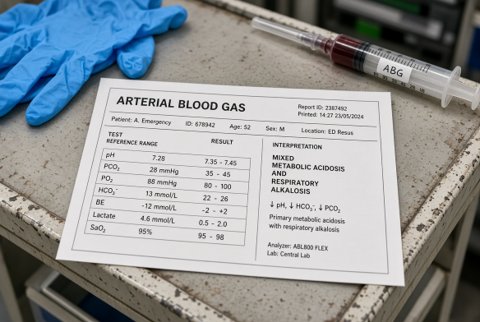
Acute hypoxaemic respiratory failure is arterial oxygen tension under 8.0 kPa (60 mmHg) on room air, or a ratio of PaO2 to inspired oxygen fraction (PF ratio) under 300 mmHg, with normal or low PaCO2. Its most severe form is the acute respiratory distress syndrome (ARDS).
Epidemiology. It is a leading reason for intensive care admission. ARDS accounts for about 10% of intensive care admissions and has mortality of about 35 to 45%, rising with severity.
Causes and associations.
- Direct lung injury: pneumonia (including viral), aspiration, inhalation injury, pulmonary contusion and drowning.
- Indirect injury: sepsis, pancreatitis, major trauma, transfusion and burns.
- Cardiogenic pulmonary oedema, pulmonary embolism, haemorrhage and interstitial disease.
ARDS definition. Onset within 1 week of an insult, bilateral opacities not explained by effusion, collapse or nodules, respiratory failure not explained by cardiac failure or fluid overload, and PF ratio 300 or less with PEEP of 5 cmH2O or more. Severity: mild 200 to 300, moderate 100 to 200, severe under 100.
Pathophysiology. Ventilation perfusion mismatch and shunt are the commonest mechanisms. In ARDS, alveolar capillary injury produces protein rich oedema, surfactant loss, atelectasis and reduced compliance.
