










Thiazide Like Diuretics
Thiazide-like diuretics share the sodium-chloride cotransporter blockade of thiazides but lack the benzothiadiazine ring. They include chlortalidone, indapamide, metolazone and xipamide. Outcome studies in hypertension and after stroke support chlortalidone and indapamide, which makes them the preferred diuretics for blood pressure control.
Mechanism. Blockade of the distal sodium-chloride cotransporter, which increases sodium and chloride excretion and raises potassium and hydrogen ion loss in the collecting duct. Indapamide has additional vasodilator and calcium channel effects. Metolazone also acts at the proximal tubule, which explains its synergy with loop diuretics.
Duration and potency. Chlortalidone has a half-life of 40 to 60 hours and gives more 24-hour blood pressure reduction than hydrochlorothiazide at similar doses. Indapamide has a half-life of about 14 to 18 hours, with sustained-release forms that give 24-hour effect at low dose. Metolazone acts for 12 to 24 hours.
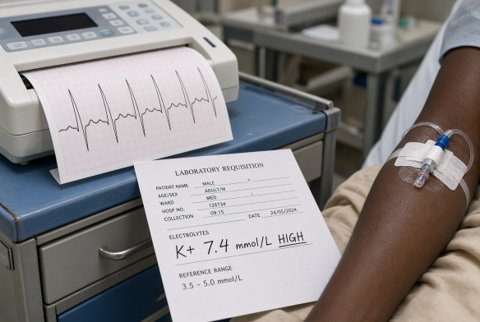
Metabolic profile. Low-dose indapamide has minimal effect on glucose and lipids. Chlortalidone causes more hypokalaemia than hydrochlorothiazide.
Pharmacokinetics. Chlortalidone binds to red cells, which prolongs action. Indapamide is extensively metabolised in the liver with renal elimination of metabolites. Metolazone is partly renally cleared.
