












Varicose Veins
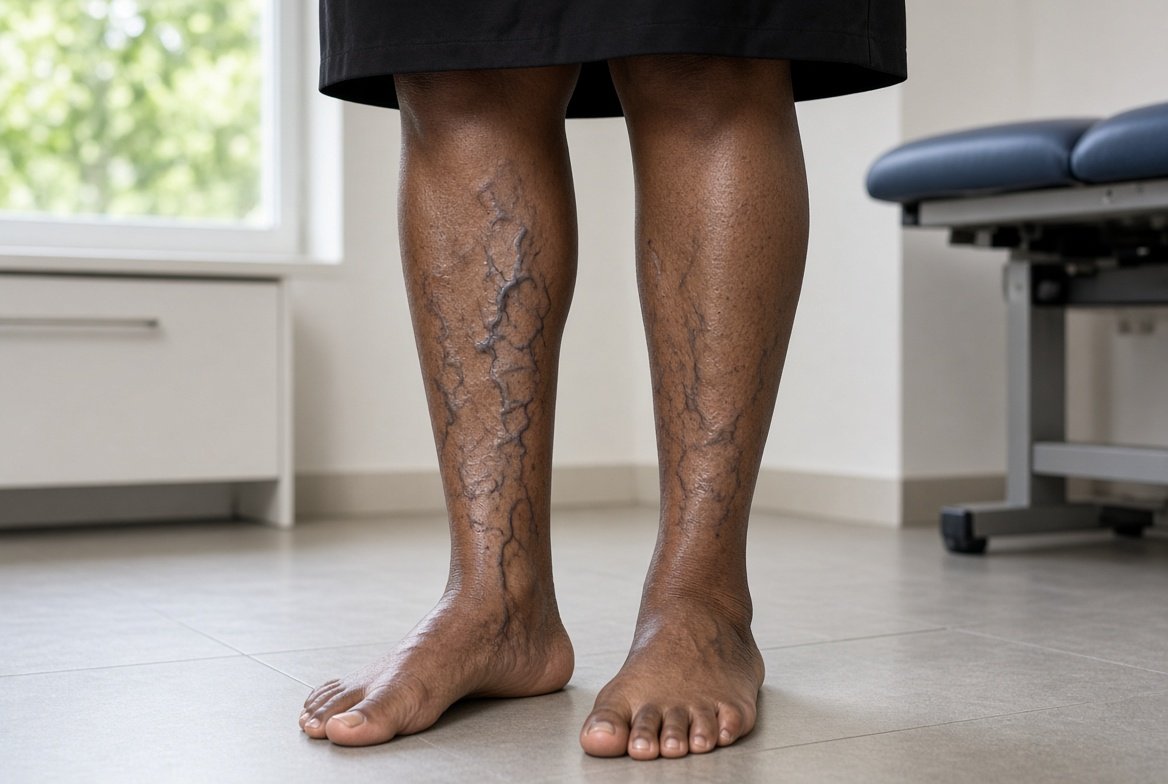
Dilated, tortuous superficial veins from valvular incompetence causing venous reflux and hypertension, typically affecting the great/small saphenous systems.
Risk factors: age, female sex, pregnancy, family history, prolonged standing occupation, obesity, prior DVT.
Visible dilated, tortuous veins (typically lower limb), aching/heaviness (worse at end of day/prolonged standing, improved with elevation/walking), itching, cramping, ankle swelling.
Chronic venous insufficiency complications: venous eczema, hyperpigmentation (hemosiderin deposition), lipodermatosclerosis (fibrotic, "inverted champagne bottle" leg), atrophie blanche, venous ulceration (typically medial malleolus, shallow, irregular, granulating base).
Rarely: superficial thrombophlebitis (tender, cord-like, erythematous segment), variceal bleeding (rare but can be significant).
Clinical examination, Trendelenburg test (historical, largely superseded).
Duplex ultrasound: assesses reflux pattern/duration (>0.5 sec reflux diagnostic), identifies incompetent perforators, guides intervention planning, recommended for anyone being considered for treatment.
Differentials: DVT (if acute swelling/pain, must exclude, especially before compression therapy), lymphedema, arterial disease (ABPI before compression therapy, contraindicated if significant arterial insufficiency), cellulitis.
- Conservative: leg elevation, regular walking/exercise, weight loss, avoid prolonged standing
- Compression stockings: symptomatic relief, reduces edema/progression, check ABPI first (contraindicated if ABPI <0.8, significant arterial disease)
- Endovenous ablation (thermal (laser/radiofrequency, or non-thermal) mechanochemical/glue): first-line intervention for symptomatic truncal varicose veins, day-case procedure, superior to open surgery (less pain, faster recovery)
- Sclerotherapy: for smaller residual/reticular veins, thread veins
- Surgical stripping/ligation: alternative if endovenous unsuitable
- Venous ulcer: compression bandaging is the cornerstone of healing (after ABPI confirms adequate arterial supply), wound care, treat underlying venous incompetence (ablation reduces recurrence significantly per evidence), address infection if present
- Superficial thrombophlebitis: NSAIDs, compression, consider prophylactic-dose anticoagulation if extensive/near saphenofemoral junction (DVT extension risk)
Referral: vascular surgery for symptomatic varicose veins for intervention consideration, venous ulceration, suspected DVT (urgent), bleeding varix.
