










Vestibular Schwannomatosis
Also known as: Neurofibromatosis Type 2 Related Schwannomatosis
Vestibular schwannomatosis is a distinct genetic tumour predisposition syndrome characterised by multiple, usually bilateral, schwannomas of the vestibular nerves along with other cranial, spinal and peripheral nerve tumours. It is also called schwannomatosis with vestibular involvement. The term NF2-related schwannomatosis applies to the disease with bilateral vestibular schwannomas.
The commonest form is NF2-related schwannomatosis, an autosomal dominant disorder caused by mutations of the NF2 gene on chromosome 22q12 (encoding merlin, a tumour suppressor). The incidence is 1 in 25,000 to 40,000. About 50 percent of cases arise from de novo mutations, and many are mosaic.
The hallmark is bilateral vestibular schwannomas (over 90 percent by age 30), with onset in the late teens and twenties (mean 18 to 24 years). Earlier onset is associated with severe disease (nonsense and frameshift mutations).
Associated tumours:
- spinal schwannomas
- meningiomas (cranial and spinal, in about 50 to 75 percent)
- ependymomas (spinal, 20 to 50 percent)
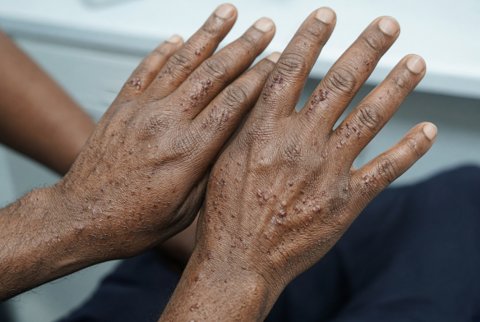
- peripheral schwannomas, and cutaneous schwannomas
Non-tumour features include juvenile posterior subcapsular lens opacities or cataracts (60 to 80 percent), retinal hamartoma, epiretinal membranes, and mononeuropathy.
Other forms are LZTR1-related and SMARCB1-related schwannomatosis. These are non-vestibular, and vestibular schwannomas are rare. Unilateral vestibular schwannoma may occur in LZTR1-related disease, the "vestibular schwannomatosis" subtype.
Complications: bilateral deafness, brainstem compression, hydrocephalus, cranial neuropathies (facial, trigeminal, lower cranial nerves), myelopathy, and premature death (median survival about 62 years, reduced in severe phenotypes).
