

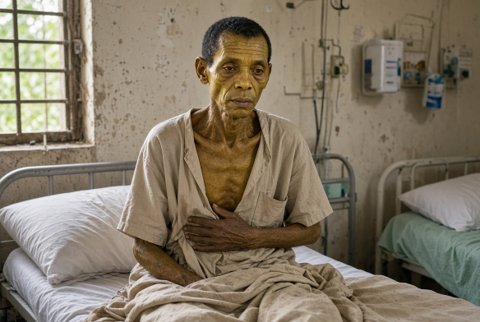










Autoimmune Gastritis
A chronic, immune-mediated gastritis in which CD4 T cells attack the gastric parietal cells and their H+/K+ ATPase and intrinsic factor, causing corpus and fundus atrophy with sparing of the antrum.
- Prevalence is about 0.5 to 2% of the general population (higher with age, in women, and with other autoimmune disease); pernicious anaemia is the end stage of vitamin B12 deficiency.
- Associations: type 1 diabetes, autoimmune thyroid disease (Hashimoto thyroiditis, Graves disease), Addison disease, vitiligo, coeliac disease, myasthenia gravis, and primary biliary cholangitis; about 20 to 40% of patients with autoimmune thyroid disease have the antibodies.
- Mechanism: loss of parietal cells leads to achlorhydria, reduced intrinsic factor and B12 absorption, reduced iron absorption, hypergastrinaemia from antral G cell stimulation, and enterochromaffin-like cell hyperplasia that may produce type 1 gastric neuroendocrine tumours.
- Risk: gastric adenocarcinoma about 3 times higher than the general population, and type 1 neuroendocrine tumours in about 5 to 10% of patients.
