

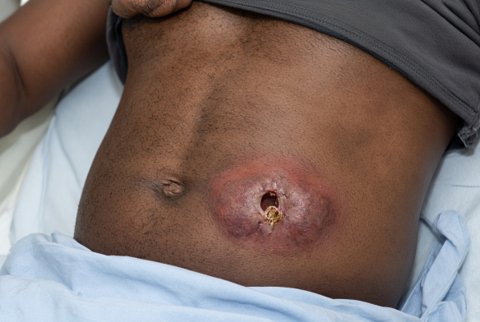

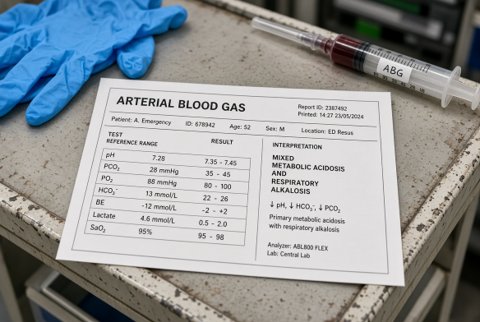








Phlegmonous Gastritis
Phlegmonous gastritis is a rare, acute, suppurative bacterial infection of the gastric submucosa that can spread to the muscularis and serosa. It is a surgical emergency with a mortality of 30% to 60%. Emphysematous gastritis is the gas forming variant.
Fewer than 1,000 cases have been reported. It is commoner in men aged 40 to 60 years.
Organisms are streptococci (alpha- and beta haemolytic) in over half of cases, Staphylococcus aureus, Escherichia coli, Klebsiella, Pseudomonas, Proteus, Haemophilus influenzae and anaerobes. Clostridium species cause emphysematous disease.
Risk factors are alcohol use disorder, immunosuppression, AIDS, chemotherapy, achlorhydria (including long term acid suppression), gastric ulcer or cancer, recent endoscopic interventions (injection, polypectomy, mucosal resection), uraemia and gastric surgery.
Pathophysiology.
Bacteria breach the mucosal barrier and multiply in the loose submucosa, causing purulent inflammation, thrombosis of vessels and necrosis. Spread leads to abscess, perforation, peritonitis and septicaemia.
