












Achilles Tendinopathy
Also known as: Achilles Tendinitis
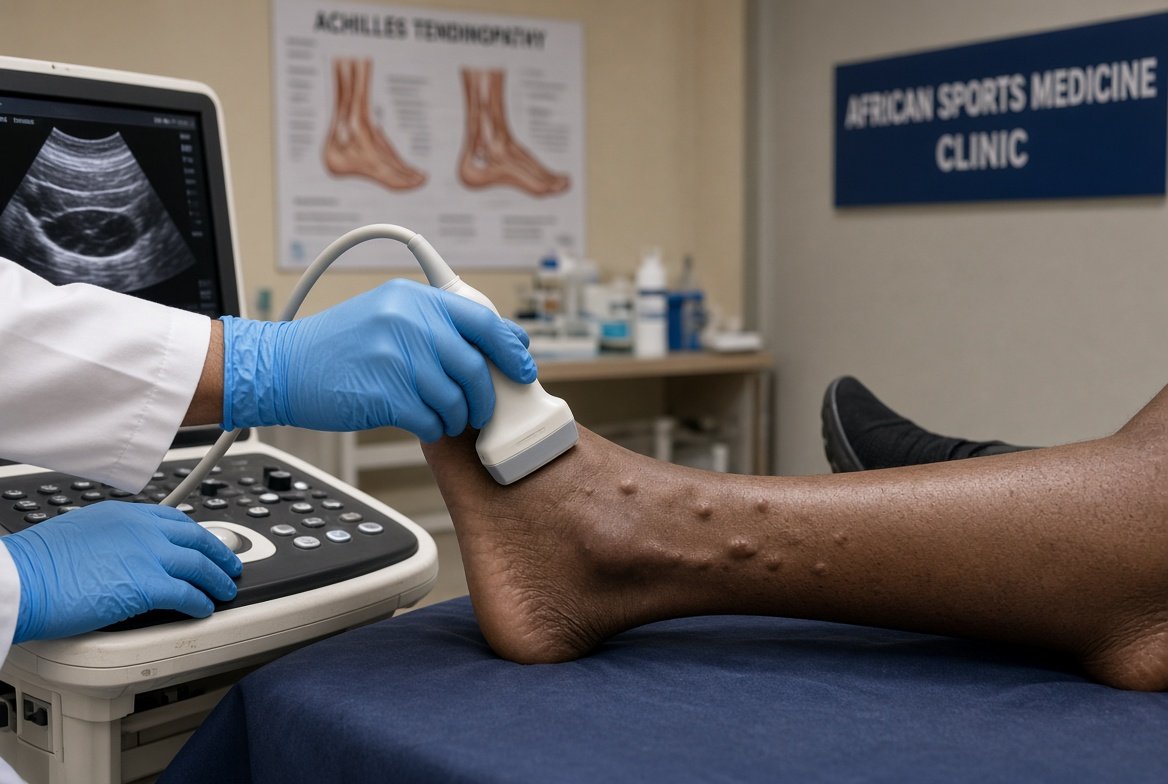
Achilles tendinopathy is a load related degenerative tendon disorder with pain, focal thickening and reduced loading capacity. It is classed as midportion (2 to 6 cm proximal to the calcaneal insertion, the more common form) or insertional (at the enthesis, often with a Haglund deformity or retrocalcaneal bursitis). The lifetime risk in recreational runners is 7 to 9%, and peak onset is 30 to 50 years.
The tendon shows disordered collagen, increased ground substance, cell proliferation and neovascularization, with little inflammatory infiltrate. Risk factors:
- Training errors (sudden increase in load, hills, speed work)
- Obesity, diabetes, hypercholesterolemia (bilateral disease and xanthomas suggest familial hypercholesterolemia)
- Fluoroquinolone and corticosteroid exposure
- Spondyloarthritis (insertional disease)
- Pes cavus or pes planus
Most patients improve with loading therapy over 3 to 6 months, but 25% have symptoms at 5 years. The main complication is partial or complete rupture.
