
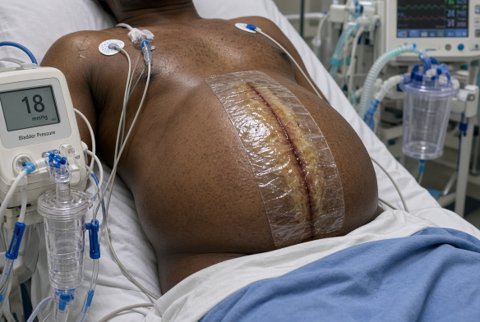











Trocar Site Hernia
Trocar site hernia is herniation of bowel, omentum or preperitoneal fat through the fascial defect left by the insertion of a laparoscopic trocar. Incidence is 0.5 to 3% overall, and up to 5% or more at the umbilicus. It is rare at 5 mm ports (under 1%).
Mechanism and risk
- Trocar diameter of 10 mm or more, particularly at the umbilicus and when the fascia is not closed
- Enlargement of a port for specimen extraction
- Cutting trocars, which leave a larger fascial defect than dilating trocars
- Prolonged operating time, repeated trocar manipulation and port site infection
- Obesity (BMI over 30), diabetes, smoking, older age, malnutrition and corticosteroid use
- Raised intra-abdominal pressure after operation (cough, vomiting, ileus)
Timing divides early-onset hernia (within 2 weeks, usually a Richter-type herniation of a bowel wall segment) from late-onset hernia (months to years, with omentum or a bowel loop). The Richter type produces obstruction or perforation without bowel dilatation and is easily missed. Strangulation occurs in a significant minority. Prevention by fascial closure reduces risk, and port closure is advised at all 10 mm or larger sites, and at 5 mm sites in children and in lateral or bladed ports.
